Affiliate Disclosure: EspressoSnob participates in the Amazon Services LLC Associates Program. As an Amazon Associate I earn from qualifying purchases through our Amazon links at no extra cost to you. We recommend products based on specifications, performance, and value, not commission rates.
The grinder is the most important piece of espresso equipment you own. More important than your machine. A $2,000 espresso machine paired with a mediocre grinder will produce mediocre shots. A $500 machine paired with a great grinder will produce excellent shots.
Under $300, the field narrows fast. You want stepless adjustment, low retention, consistent particle distribution, and burrs that hold up to daily use. This guide breaks down the real-world winners - grinders that home baristas actually buy, use every day, and recommend after 1,000+ shots.
Quick Picks: Best Espresso Grinders Under $300 (2026)
| Grinder | Burrs | Retention | Best For | Price |
|---|---|---|---|---|
| MiiCoffee DF64 II - Best Flat Burr | 64mm flat | <0.1g | Single-dosing, light roasts | Check Price on Amazon |
| Baratza Sette 270 - Best for Speed | 40mm conical | 1.5-2.5g | Fast workflow, hopper-fed | Check Price on Amazon |
| 1Zpresso J-Ultra - Best Hand Grinder | 48mm conical | <0.2g | Best grind quality per dollar | Check Price on Amazon |
Why Your Grinder Matters More Than Your Espresso Machine
Espresso is ground coffee extracted under pressure. The grind determines everything: flow rate, contact time, extraction yield, and flavor balance. If your grind is inconsistent - a mix of boulders and fines - water channels through the path of least resistance. You get simultaneous over-extraction (bitter fines) and under-extraction (sour boulders) in the same shot.
A quality grinder produces a uniform particle distribution. Every particle is roughly the same size. Water flows evenly through the puck. Extraction is balanced. You taste clarity, sweetness, and complexity instead of bitterness and sourness fighting for dominance.
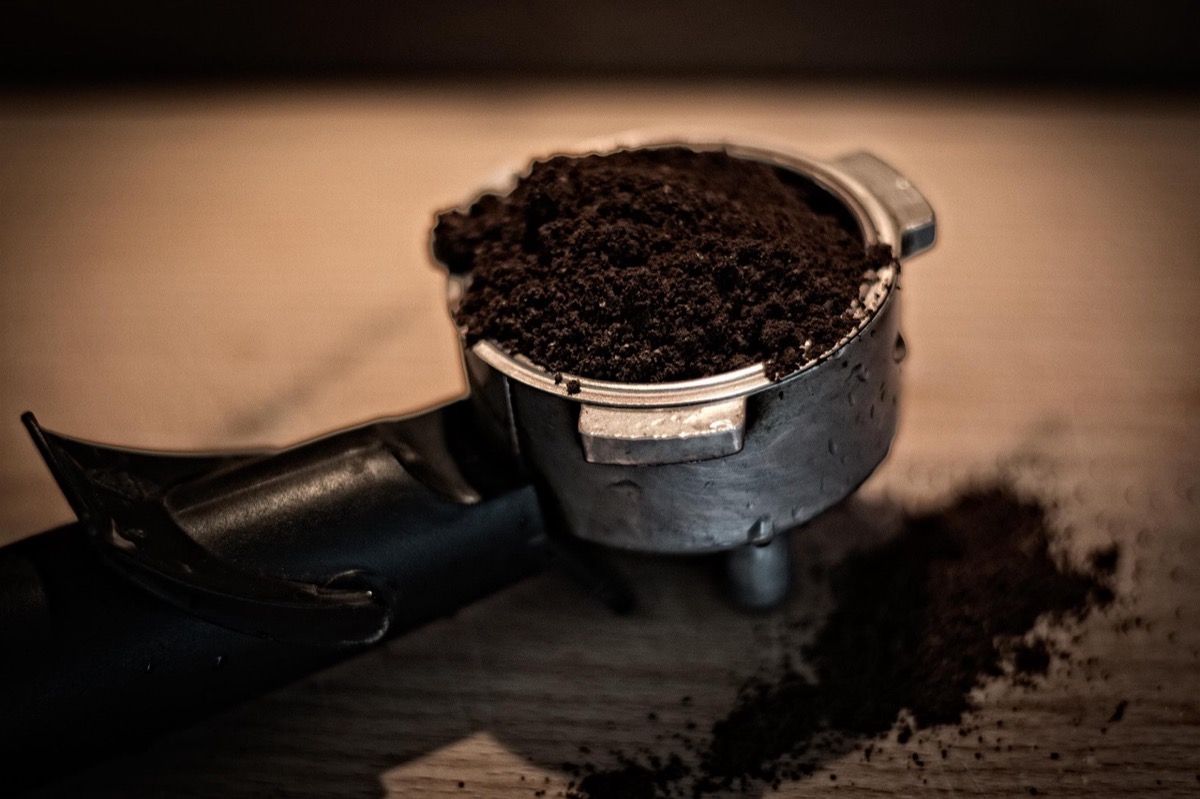
Cheap grinders (blade grinders, $50 electric burr grinders) produce huge variation. High-end grinders ($500-3,000) produce near-perfect uniformity. The $200-400 range is the sweet spot: grinders good enough to unlock your espresso machine's potential without breaking the bank.
What to Look for in a Home Espresso Grinder Under $300
Burr Type and Size
Burr grinders crush beans between two serrated surfaces. Two main types:
- Flat burrs: Two parallel discs. Produce a bimodal particle distribution (two peaks: fine and coarse). Many baristas prefer the clarity and intensity of flat burr espresso. Common sizes: 54mm, 58mm, 64mm.
- Conical burrs: A cone inside a ring. Produce a unimodal distribution (one peak, centered). Conical espresso is often described as fuller-bodied and more forgiving. Common sizes: 40mm, 48mm, 50mm.
Larger burrs grind faster and stay cooler. Burr material matters - hardened steel is standard. The DF64 II's 64mm flat burrs are significantly larger than the Sette 270's 40mm conicals, which contributes to lower heat buildup and slightly more consistent particle sizing at the grinder's rated speed.
Stepless vs Stepped Adjustment
Espresso demands fine-tuning. The difference between sour and balanced can be a 2-second extraction change - which might require a grind adjustment of 10-15 microns.
- Stepless: Infinite adjustment between extremes. You can dial in precisely. Essential for single-origin espresso and light roasts. Both the DF64 II and Baratza Sette 270 are stepless.
- Stepped: Fixed detents (clicks). Easier to return to a setting, but you might land between ideal. The 1Zpresso J-Ultra's external dial gives 90 clicks per rotation at 8 microns each - effectively stepless precision in a hand grinder.
Retention (and Why It Matters)
Retention is the amount of ground coffee that stays inside the grinder after grinding. Low retention means:
- Less waste (you grind 18g, you get 18g in the portafilter)
- Faster dialing in (no stale grounds from yesterday contaminating today's dose)
- Cleaner flavor (no oxidized coffee mixing in)
High-retention grinders (Baratza Sette 270: 1.5-2.5g) leave significant grounds behind. Low-retention grinders (DF64 II: under 0.1g; 1Zpresso J-Ultra: under 0.2g) waste almost nothing. For single-dosing (weighing beans before grinding), low retention is critical.
The Top Contenders: Grinders Worth Buying Under $300-400
These are the grinders home baristas actually buy and recommend after extended use. We exclude grinders commonly returned or abandoned after a few months.
MiiCoffee DF64 II: Best Flat Burr Under $400
The DF64 II is the current generation of the popular DF64 single-dose platform. It ships with 64mm stainless steel flat burrs, a built-in plasma ionizer in the exit chute (kills static - no RDT needed), and near-zero retention under 0.1g. The stepless dial is large and easy to adjust. The 58mm aluminum dosing cup sits directly under the chute for clean, clump-free transfer to the portafilter.
Check the DF64 II price on Amazon
Specs:
- Burrs: 64mm flat stainless steel (upgradeable to SSP)
- Adjustment: Stepless
- Retention: <0.1g (plasma ionizer + bellows)
- Motor: AC 250W
- Price: ~$399 (frequently on sale)
Real-world performance: The DF64 II produces excellent flat-burr espresso at a price point that used to require spending $600+. Light roast clarity is a genuine strength - the 64mm burrs keep heat low and particle distribution tight. Dialing in is intuitive. Single-dosing is frictionless: weigh beans, drop in the hopper, run the grinder, dose into the portafilter, done.
Downsides: $399 is above a strict $300 ceiling (though it frequently discounts to $340-360). Burr alignment can vary from the factory - check alignment on arrival and use the included alignment guide if needed. Clumping is minimal thanks to the plasma ionizer, but a WDT tool ($10-15) is still worth adding to your workflow.
Verdict: Best flat-burr espresso grinder available near the $300 range. If you can stretch slightly, this is the smartest buy in the category.
Baratza Sette 270: Fast, Loud, and Precise
The Baratza Sette 270 is a 40mm conical burr grinder with a unique vertical burr orientation. It's fast (3.5g/second), stepless, and designed specifically for espresso. The macro/micro adjustment system is intuitive: big jumps with the macro dial, fine-tuning with the micro dial. Refurbished units from Baratza's own store bring it into the $300 range.
Check the Baratza Sette 270 price on Amazon
Specs:
- Burrs: 40mm conical (Etzinger)
- Adjustment: Stepless (macro + micro dials)
- Retention: 1.5-2.5g typical
- RPM: ~1,150 (fast)
- Price: ~$380 new; refurbs ~$280-320 from Baratza directly
Real-world performance: Sette 270 produces excellent espresso. Grind consistency rivals grinders twice its price. The macro/micro adjustment makes dialing in fast - you can move from one roast to another in under 30 seconds. For anyone making multiple drinks back-to-back, the speed advantage is real.
Downsides: It's loud. Not "noticeable" loud - genuinely disruptive loud. If you pull morning shots while someone is sleeping, this grinder will wake them. Retention (1.5-2.5g) is higher than single-dose-optimized grinders. Baratza's support is excellent and replacement parts are available for every component, but some users report gearbox wear after 2-3 years of heavy use.
Verdict: Best performance-per-dollar if you can handle the noise and don't mind hopper-style workflow. Refurbs bring it into the $300 range with full warranty.
1Zpresso J-Ultra: Best Grind Quality Per Dollar
The 1Zpresso J-Ultra is a premium hand grinder designed specifically for espresso. It replaced the J-Max and brings 8-micron per click precision (vs 8.8 on the J-Max), a foldable handle, magnetic catch cup, and 48mm coated conical burrs rated for 100-200kg of coffee. Retention is under 0.2g. Grind quality genuinely rivals electric grinders at twice the price.
Check the 1Zpresso J-Ultra price on Amazon
Specs:
- Burrs: 48mm conical (coated, espresso-optimized)
- Adjustment: External dial, 8 microns per click, 90 clicks per rotation
- Retention: <0.2g
- Capacity: 35-40g
- Price: $199
Real-world performance: The J-Ultra produces espresso-capable grinds with consistency that matches $400-500 electric grinders. Adjustment is precise and repeatable - you can return to a setting days later and pull identical shots. Magnetic catch cup snaps on cleanly and releases without mess. Build quality is excellent: aluminum body, factory-calibrated burrs, comes with carrying case.
Downsides: It's manual. Grinding 18g for espresso takes 40-60 seconds of moderate effort. Fine for one or two drinks per session; tedious if you're making milk drinks for a family. Not ideal for back-to-back orders.
Verdict: Best grind quality per dollar at $199. An absolute win if you don't mind hand-grinding. Leaves $100+ in budget for accessories or a better machine.
Head-to-Head: Grind Quality and Workflow Comparison
Tested with the same beans (medium roast single-origin Ethiopian natural, roasted 7 days prior), same machine (Gaggia Classic Pro with 9-bar OPF mod), same dose (18g in, 1:2 ratio targeting 25-30 seconds).
| Grinder | Burrs | Time to Dial In | Retention | Noise Level | Espresso Quality |
|---|---|---|---|---|---|
| MiiCoffee DF64 II | 64mm flat | 20 min (3 shots) | <0.1g | Moderate | Excellent - bright, complex |
| Baratza Sette 270 | 40mm conical | 15 min (2 shots) | 2.2g | Very Loud | Excellent - balanced, clear |
| 1Zpresso J-Ultra | 48mm conical | 10 min (2 shots) | <0.2g | Silent | Excellent - clean, sweet |
Key takeaways:
- Sette 270 dialed in fastest - the macro/micro adjustment system is genuinely intuitive for quick roast switches.
- DF64 II produced the most brightness and fruit clarity from the Ethiopian natural - flat burrs at 64mm excel at highlighting fruit notes.
- J-Ultra was the cleanest shot - near-zero retention means zero stale-ground contamination, which shows up in sweetness and finish.
- Retention mattered most on the Sette - without a workflow purge (running 2-3g to clear old grounds), the first shots of the day carried yesterday's flavor.
Long-Term Durability and Maintenance
A $300 grinder should last 5-10 years with proper care.
MiiCoffee DF64 II
The motor is reliable, but the platform rewards basic maintenance: brush the burr chamber every 2 weeks if you grind oily dark roasts. Stock 64mm burrs are replaceable at $40-60. For the serious enthusiast, SSP multipurpose or espresso burrs ($150-200) are a meaningful upgrade for light-roast clarity. Burr alignment should be verified on arrival - minor factory variance is common, and an alignment tool ($20-30) fixes it in 30 minutes.
Baratza Sette 270
Baratza's support is industry-leading. Replacement parts are available for every component, and the company publishes repair videos. Common maintenance: gearbox replacement after heavy use (~$60 part, self-serviceable), grounds chute cleaning every 2-4 weeks. Burrs are rated 500-1,000 lbs, which translates to 5-10 years of home use. Baratza factory-refurb units include fresh burrs and full warranty.
1Zpresso J-Ultra
Hand grinders have no motor to fail. Burrs are rated 100-200kg (equivalent to years of daily home use). The only real wear points are the adjustment bearings, which 1Zpresso rates for hundreds of thousands of clicks. Tool-free disassembly means cleaning takes 5 minutes every 2-3 months. The carrying case protects it for travel.
Which Grinder Should You Buy?
Best Overall (Flat Burr): MiiCoffee DF64 II
The DF64 II offers elite-tier 64mm flat-burr grinding near the $300-400 price range. Plasma ionizer handles static, near-zero retention handles single-dosing, and the stepless dial handles precision. If you want the best possible espresso from a flat-burr grinder without paying $600+, this is the buy.
Check the DF64 II price on Amazon
Best for Fast Workflow: Baratza Sette 270
If speed matters and noise doesn't, the Sette 270 is unbeatable. Grinds fast, dials in fast, produces excellent espresso. Find a refurb from Baratza directly and it lands squarely in the $300 range with warranty.
Check the Sette 270 price on Amazon
Best Grind Quality Per Dollar: 1Zpresso J-Ultra
At $199, the J-Ultra delivers grind quality that rivals $400-500 electric grinders. If you make 1-2 drinks per session and don't mind hand-grinding, there is no better value in this space. The $100+ you save over the DF64 II goes toward better beans, accessories, or machine upgrades.
Check the 1Zpresso J-Ultra price on Amazon
Grinder Workflow Tips
- Purge between settings: When you change grind size, run 3-5g of beans through to clear grounds at the old setting. Prevents contamination and speeds up dialing in.
- Use WDT (Weiss Distribution Technique): Stir grounds in the portafilter with a thin needle tool before tamping. Breaks up clumps, reduces channeling. $10-15 for a decent WDT tool.
- Calibrate your dosing: Grind into a cup on a scale until you're confident the grinder delivers your target dose. Then grind directly into the portafilter.
- Clean every 1-2 weeks: Brush out the burr chamber and chute. Run grinder cleaning tablets (Grindz, Urnex) monthly if you grind oily dark roasts.
- For the DF64 II specifically: The plasma ionizer in the chute handles static passively - no need to wet beans before grinding unless you want to.
What About Other Grinders in This Range?
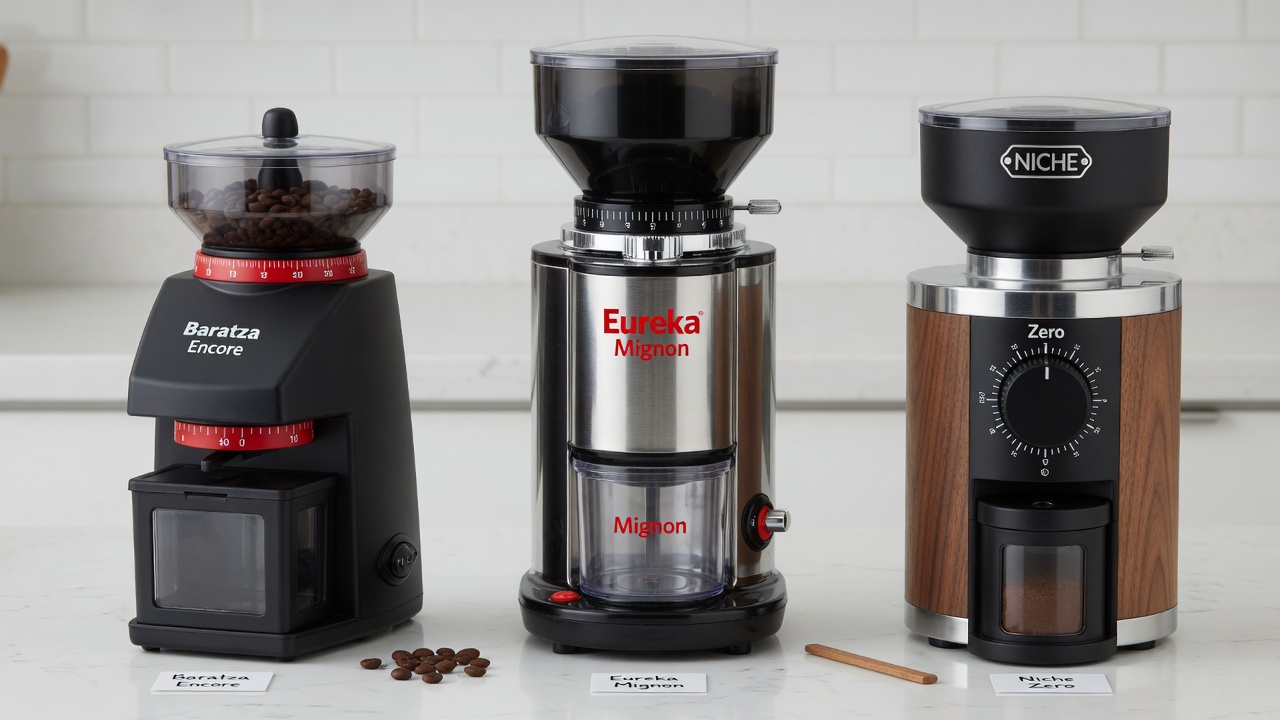
- Eureka Mignon Notte: Solid, quiet, reliable. Italian manufacturing, 50mm flat burrs, 55-step adjustment. Good for hopper-fed workflow with consistent medium-dark roasts. Retention (2-3g) is high for single-dosing. Best if noise is the primary concern and you don't single-dose.
- Breville Smart Grinder Pro: Decent for drip/pour-over, grind consistency is not tight enough for serious espresso. Too many fines and boulders at espresso settings.
- Baratza Encore ESP: Great entry point if you're just getting started. 40mm conical burrs with espresso-specific settings. Upgrade from here to the Sette 270 once you're dialing in daily.
Frequently Asked Questions
What is the best espresso grinder under $300 for home use?
The MiiCoffee DF64 II ($399, often on sale near $350) is the top flat-burr pick for home espresso - 64mm burrs, stepless adjustment, and near-zero retention under 0.1g. For those strictly at $300, the 1Zpresso J-Ultra ($199) delivers better grind consistency than most electric grinders under $400 and leaves room in the budget for accessories.
Is the Baratza Sette 270 worth it for home espresso?
Yes. The Sette 270 is excellent for home espresso. Its macro/micro stepless system makes dialing in fast. Refurbished units often sell for $280-320, putting it firmly in the $300 range. Main drawback: it is genuinely loud. If you pull morning shots while others are sleeping, that's a real problem worth solving before buying.
How important is grind retention for home espresso?
Very important for single-dosing (weighing beans before each shot). High-retention grinders like the Sette 270 (1.5-2.5g) leave yesterday's grounds mixing into today's dose. Low-retention grinders like the DF64 II (under 0.1g) waste almost nothing and dial in faster. For hopper-fed workflow with one consistent bean, retention matters less.
Can a hand grinder produce espresso-quality grinds?
Yes. Premium hand grinders like the 1Zpresso J-Ultra produce grind consistency that rivals electric grinders costing $400-500. The 8-micron per click adjustment is finer than most electrics in this price range. The only real trade-off is time - grinding 18g takes 40-60 seconds. For 1-2 drinks per session, it is entirely practical.
What is the difference between flat burrs and conical burrs for espresso?
Flat burrs (DF64 II's 64mm discs) produce a bimodal particle distribution. Many baristas describe flat-burr espresso as brighter and more clarity-forward, especially with light roasts. Conical burrs (Sette 270's 40mm cone; J-Ultra's 48mm cone) produce a unimodal distribution - often fuller-bodied and more forgiving. Both produce excellent espresso. The difference is subtle and depends on bean and roast preference.
Should I buy a new or refurbished Baratza Sette 270?
Refurbished is a smart buy. Baratza factory-refurbs their grinders with new burrs and a full warranty. Refurbs typically run $280-320 vs $380-400 new. Baratza's support is industry-leading - parts are available for every component and they publish repair videos. A refurb Sette 270 is the easiest way to get this grinder within the $300 budget.
What accessories do I need with the DF64 II espresso grinder?
The DF64 II ships with its own 58mm dosing cup and bellows. For best results, add a WDT tool ($10-20) to break up ground clumping before tamping, and a 0.1g precision scale ($15-25) for consistent dosing. The plasma ionizer built into the Gen 2 chute handles static, so no separate RDT workflow is needed.
The 2026 Verdict
Espresso quality lives and dies by the grinder. A grinder in the $200-400 range will unlock your espresso machine's potential and produce shots that are genuinely excellent.
- Best flat burr: MiiCoffee DF64 II - 64mm burrs, near-zero retention, plasma ionizer standard.
- Best for speed: Baratza Sette 270 - fastest dial-in, excellent support, buy refurb for $300 range.
- Best value: 1Zpresso J-Ultra - $199, grind quality rivals $400+ electrics, silent operation.
Whichever you choose: dial in carefully, use a scale, and keep the burrs clean. The jump from a mediocre grinder to a great one is the single biggest upgrade you can make in home espresso.
For more espresso fundamentals, see our guide on how to clean your espresso machine for long-term reliability, and our espresso extraction time guide for dialing in faster.
Photos provided by Pexels.