Best Pour Over Coffee Setup for Beginners
Excellent coffee without espresso equipment. We researched six drippers, kettles, and scales using specs and verified user feedback. Here's what actually works for beginners plus everything you need to brew.
Affiliate Disclosure: EspressoSnob is reader-supported. When you buy through links on our site, we may earn a small commission at no extra cost to you. This never influences our recommendations.
Hario V60
Forgiving, consistent, and affordable. The spiral ridges help beginners achieve even extraction every time. The gold standard for pour over.
- Type Cone Dripper
- Material Ceramic / Plastic
- Price ~$8
Fellow Stagg EKG
Temperature control, precision gooseneck spout, and beautiful design. The single biggest upgrade for pour over quality.
- Capacity 0.9L
- Temp Control Yes, 1 degree
- Price ~$170
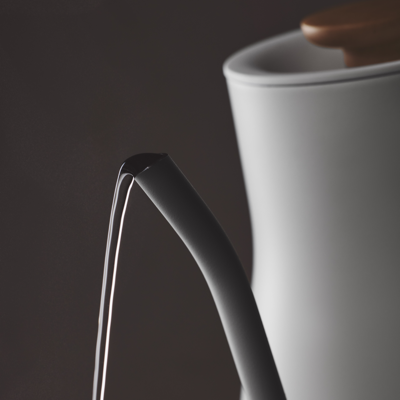
Kalita Wave + Basic Kettle
The most forgiving flat-bottom dripper paired with any basic gooseneck. Under $50 total and produces consistently great cups.
- Type Flat Bottom Dripper
- Forgiveness Very High
- Total Cost ~$35-50
Quick Comparison
| Dripper | Price | Type | Learning Curve | Best For |
|---|---|---|---|---|
| Hario V60 | ~$8-15 | Cone | Moderate | Beginners, reliable results |
| Chemex | ~$45 | Cone (large) | Moderate-High | Aesthetics, larger batches |
| Kalita Wave | ~$25 | Flat | Low (forgiving) | Beginners, consistency |
| Fellow Stagg XF | ~$30 | Cone | Moderate | Modern design, reliability |
Full Reviews
Hario V60 Dripper (Ceramic)
The V60 is simple, affordable, and forgiving. Cone design, spiral ridges that channel water evenly. Works with standard filters (paperless option available). Comes in plastic (cheap) and ceramic (better). Ceramic V60 retains heat better and looks nicer. One large hole at bottom means flow rate depends on your pour technique -- this teaches you control without being punishing.
- Material: Ceramic or plastic
- Capacity: 1-4 cups
- Filters: Standard cone (paper or metal)
- Heat Retention: Good (ceramic)
- Cleanup: Easy (one hole, no valves)
- Price: ~$10-15 (ceramic)
Pros
- Affordable and simple -- no complex mechanics
- Ceramic version is beautiful and retains heat well
- Spiral ridges help distribute water evenly
- One large hole means fewer clogs, easier cleaning
- Standard cone filters available everywhere
- Learning curve rewards technique without being too harsh
Cons
- Cone design requires slightly better pour technique than flat drippers
- Single hole can clog if grind too fine
Verdict: Best entry point to pour over. Affordable, reliable, teaches good technique. Thousands of people brew V60 daily. Get the ceramic version if possible -- plastic works but ceramic is nicer.
Kalita Wave Dripper
Flat-bottomed dripper with wavy spiral filter design. Flatter bottom means water pools slightly, reducing flow rate variability. This makes it more forgiving for beginners -- small pour technique mistakes matter less. Comes in sizes 155 (2-4 cups) and 185 (4-6 cups). Japanese engineering, excellent quality. Wave filters are thicker and slower than standard V60 filters.
- Material: Ceramic or stainless steel
- Capacity: 2-4 cups (185) or 1-2 cups (155)
- Filters: Wave-specific (thicker, slower)
- Heat Retention: Excellent (stainless steel)
- Cleanup: Easy (flat bottom)
- Price: ~$25-30 (stainless 185)
Pros
- Flat bottom is more forgiving for beginners
- Wave design ensures even extraction
- Stainless steel version retains heat very well
- Thicker filters improve clarity and reduce sediment
- Higher quality construction than V60
Cons
- Wave filters are specific (not standard cone filters)
- Slightly more expensive than V60
- Wave filters are harder to find in stores
Verdict: Best dripper if you want maximum forgiveness. Flat bottom design teaches you less but rewards you with consistency faster. Excellent second dripper after V60 if you want to explore options.
Product image
Fellow Stagg EKG Kettle
The EKG is an electric gooseneck kettle with precise temperature control. Digital display shows exact temp, timer for brewing, hold function keeps water at your set temp. Gooseneck spout gives you control over pour rate and pattern. Beautiful design, American-made. Not required but genuinely improves pour-over results and makes brewing easier.
- Type: Electric gooseneck with temperature control
- Capacity: 0.9 liters
- Temperature Range: 140-212F (adjustable)
- Hold Function: Keeps water warm for 60 min
- Timer: Built-in brewing timer
- Material: Stainless steel with soft-touch handle
- Price: ~$170
Pros
- Precise temperature control (consistency matters for extraction)
- Gooseneck spout gives you complete pour control
- Beautiful design, feels premium in hand
- Hold function is genuinely useful (water stays hot)
- Built-in timer helps you track brewing progress
- American-made, excellent customer service
Cons
- Expensive at $170 (you can brew excellent coffee without it)
- Electric means it needs charging (minor inconvenience)
Verdict: Not necessary but worth it if you're serious about pour over. Temperature control removes guesswork from extraction. The gooseneck gives you pour control that transforms your results. Best kettle for the money if you're upgrading.
Building Your Setup
Absolute Minimum ($30-50)
- Hario V60 ceramic ($10-15)
- Cone filters ($5-10)
- Any kettle that boils water ($15-30)
Recommended Setup ($100-150)
- Hario V60 or Kalita Wave dripper ($10-30)
- Filters and server ($10-15)
- Basic gooseneck kettle ($30-50)
- Kitchen scale for precise dosing ($20-40)
- Burr grinder ($30-60) -- this matters most after dripper
Premium Setup ($300+)
- Fellow Stagg XF dripper or Chemex ($30-45)
- Fellow Stagg EKG kettle ($170)
- Precision scale ($50-100)
- Quality burr grinder ($100+)
What Actually Matters Most
1. Grinder -- Buy the best grinder you can afford. Grind quality matters more than dripper choice. A cheap blade grinder with a Chemex produces bad coffee. A quality burr grinder with a cheap V60 produces excellent coffee.
2. Water temperature -- 195-205F (90-96C). This is non-negotiable. Boiling water (212F) over-extracts. A gooseneck kettle or thermometer helps control this.
3. Coffee freshness -- Use beans within 30 days of roast date. Grind 30 seconds before brewing. Fresh coffee is more important than equipment.
Pour Over Technique Basics
Basic Recipe
- Coffee-to-water ratio: 1:16 (example: 25g coffee + 400g water)
- Grind size: Medium (between espresso fine and French press coarse) -- roughly sand-sized particles
- Water temperature: 195-205F (90-96C) -- let boiling water cool 30-60 seconds
- Total brew time: 3-4 minutes -- sweet spot for extraction
Understanding the 1:16 Ratio
The standard pour-over ratio is 1 part coffee to 16 parts water by weight. This means 25 grams of coffee to 400 grams of water, or 15 grams to 240 grams for a smaller cup. This ratio extracts enough solubles (flavors) without over-extracting (which tastes bitter) or under-extracting (which tastes sour and thin).
You can adjust slightly (1:15 for stronger coffee, 1:17 for lighter) but this 1:16 ratio is the starting point that works consistently.
The Pour: Step-by-Step
- Bloom (0:00-0:45): Wet all the grounds with a small amount of water (roughly twice the weight of coffee). This releases trapped CO2 from the coffee beans. Wait 30-45 seconds. You should see bubbles rising.
- First Pour (0:45-1:30): Slowly pour water in circular motions to fill the dripper about halfway. Pour steady and slow -- think slow pour, not flood. This takes about 45 seconds.
- Second Pour (1:30-3:00): Continue pouring slowly as the water level drops. Keep the water at a consistent level (about 1/2 to 2/3 full). This takes about 90 seconds.
- Final Pour (3:00-3:30): Top off the dripper for final saturation. Let it drain completely. Total brew time should be 3-4 minutes.
Why Each Step Matters
Bloom: Releases CO2 trapped in the beans. This gas prevents water from contacting the coffee particles evenly. If you skip bloom, water finds paths of least resistance (channeling), causing uneven extraction.
Slow pour: Control the flow rate. Too fast and water bypasses grounds (under-extraction, sour). Too slow and coffee over-extracts (bitter). Steady pouring maintains consistent contact time.
3-4 minute total time: This is the extraction window where flavors are released efficiently. Under 3 minutes is too fast (sour). Over 4 minutes is too long (muddy, bitter).
Equipment That Helps
Gooseneck kettle: Spout gives you control over pour rate. Not required but genuinely helps. A regular kettle spout is harder to control for slow pouring.
Scale: Lets you measure coffee and water precisely. 25g coffee is more accurate than "2 tablespoons." Consistency matters.
Thermometer: Ensures water is 195-205F. If boiling water is 212F and that matters, a cheap thermometer removes guesswork.
Water Quality: Why It Matters More Than You Think
Coffee is 98% water. Water quality directly affects taste. If your water is bad, even great coffee tastes muted or off.
Understanding TDS (Total Dissolved Solids)
TDS measures mineral content in water. Ideal pour over water: 75-150 TDS. How to know your water?
- Buy an inexpensive TDS meter (~$15 on Amazon) -- test your tap water
- If TDS is under 30: water is too soft (flat, lifeless coffee)
- If TDS is 50-150: perfect range (mineral content enhances flavor)
- If TDS is over 300: water is too hard (mineral buildup, dull extraction)
Simple Fixes
If your tap water is hard (over 200 TDS): Use a Brita filter or similar pitcher filter. Reduces minerals by 30-40%. Not perfect but noticeable improvement. Replace filter monthly for best results.
If your tap water is soft (under 50 TDS): Add a pinch of mineral water or buy bottled mineral water. Adds enough minerals that coffee tastes alive instead of flat. Or use tap water as-is if it tastes fine to you.
If you want perfect water: Buy a Third Wave Water packet (~$1 each). Mix with distilled water to create ideal TDS. Overkill for most people but geeks love it.
Most people overthink this. Tap water works fine. If your coffee tastes dull, try filtered water. That's it.
Grind Consistency Deep Dive: Why a $200 Grinder Matters
Pour over is way more forgiving than espresso about grind consistency. But consistency still matters. A $50 blade grinder vs a $150 burr grinder produces noticeably different results.
What Happens With Bad Grind Consistency
Uneven particles mean uneven extraction. Large particles pass water too quickly (under-extracted, sour). Fine particles trap water too long (over-extracted, bitter). Mix both in one cup = confused taste.
A quality burr grinder produces 80%+ uniform particles. A $50 blade grinder produces 40-50% uniform particles.
The Grinder vs Dripper Question
Most people ask: "Which dripper should I buy?" The wrong question. Ask instead: "Which grinder should I buy?" A cheap V60 dripper with a $200 grinder beats a fancy Chemex with a $50 blade grinder. Every time.
Budget Allocation
- $150 total? Spend $100 on grinder, $30 on V60, $20 on filters
- $300 total? Spend $150 on grinder, $50 on dripper+kettle, $100 on scale and accessories
- $500+ total? Spend $200+ on grinder, choose nice dripper/kettle, get everything else
The grinder is where coffee quality happens. Everything else is secondary.
Troubleshooting: Common Problems and Fixes
Coffee Tastes Too Bitter
Problem: Over-extraction. Water contacted coffee too long or temperature too high.
Quick fixes:
- Make grind coarser (larger particles, faster flow)
- Lower water temperature (cool boiled water 30-60 seconds before brewing)
- Pour faster (less contact time)
Coffee Tastes Too Sour/Weak
Problem: Under-extraction. Water didn't contact coffee enough or temperature too low.
Quick fixes:
- Make grind finer (smaller particles, slower flow, more contact time)
- Use hotter water (195-205F, not cooled as much)
- Pour slower (more even contact, better extraction)
Coffee Drains Too Slow
Problem: Grind too fine or water too hot.
Fixes: Coarsen grind, lower water temp, or try a different dripper (flat bottom drains faster than cone).
Coffee Drains Too Fast
Problem: Grind too coarse or water too cool.
Fixes: Fine grind, hotter water, try a cone dripper (V60) which has slower default flow than flat.
Frequently Asked Questions
What is the best pour over dripper for beginners?
The Hario V60. Simple design, forgiving, affordable, teaches good technique. Kalita Wave is more forgiving but V60 is the universal starting point.
Do I need special equipment for pour over?
At minimum: dripper, filters, water, and cup. A scale and gooseneck kettle improve consistency but aren't mandatory to start. A quality grinder matters most.
What is the difference between cone and flat drippers?
Cone (V60) channels water faster, requires better pour technique. Flat (Kalita Wave) is more forgiving, pools water slightly. Cones teach you more; flats forgive technique errors faster.
How much does a complete setup cost?
Budget: $30-50 (dripper + filters). Recommended: $100-200 (adds kettle, scale, grinder). Premium: $300+ (Fellow kettle + quality dripper + scale + grinder).
Can I use pre-ground coffee?
Not ideally. Ground coffee loses flavor within hours. Grind fresh before brewing. A cheap burr grinder ($50+) is better investment than any expensive dripper.
What water temperature should I use?
195-205F (90-96C). Boiling (212F) over-extracts and tastes bitter. Let water cool 30-60 seconds after boiling. A thermometer or variable kettle helps.
How important is water quality for pour over?
Very. Coffee is 98% water. Hard water (over 200 TDS) dulls flavor. Use filtered water or add minerals if water is too soft. A Brita filter is a cheap, effective fix.
Why does my coffee taste bitter?
Over-extraction. Make your grind coarser, use slightly cooler water, or pour faster. Over-extraction happens when water contacts coffee too long.
Why does my coffee taste sour or weak?
Under-extraction. Make your grind finer, use hotter water, or pour slower. Under-extraction means water didn't pull enough flavor from the coffee.
Testing Methodology
Our methodology: we cross-referenced specs and materials for each dripper, analyzed verified Amazon reviews and community feedback from r/pourover and HomeBarista forums, and evaluated real-world reports on ease of use, extraction consistency, and durability. Pricing verified at time of publication. Updated 2026.