Best Espresso Grinder 2026
Deep research across six grinders from Baratza, Niche, Eureka, Fellow, and others. We dug into specs, user feedback, and real-world reports to find the best consistency, build quality, and value for home espresso.
Affiliate Disclosure: EspressoSnob is reader-supported. When you buy through links on our site, we may earn a small commission at no extra cost to you. This never influences our recommendations.
Baratza Sette 270Wi
Best combination of price, consistency, and ease of use. Stepless adjustment, minimal retention, and rock-solid reliability.
- Burr Type Conical, 40mm
- Adjustment Stepless
- Retention Minimal (~0.5g)
- Price ~$400
Niche Zero
Exceptional particle uniformity, near-zero retention, and beautiful design. The single-dose workflow champion.
- Burr Type Conical, 63mm
- Adjustment Stepless
- Retention Near-zero (~0.2g)
- Price ~$700
Baratza Encore ESP
Most affordable dedicated espresso grinder. Stepped burrs with decent consistency for the price. The smart entry point.
- Burr Type Conical, 40mm
- Adjustment Stepped (20 settings)
- Retention Low (~1g)
- Price ~$200
Quick Comparison
| Grinder | Price | Burr Type | Adjustment | Retention | Best For |
|---|---|---|---|---|---|
| Baratza Sette 270Wi | ~$400 | Flat | Stepless | <0.5g | Balanced all-around use |
| Niche Zero | ~$700 | Conical | Stepless | <0.1g | Single-dose, premium quality |
| Eureka Mignon Specialita | ~$350 | Flat | Stepped | 1-2g | Italian espresso, workflow |
| DF64 Gen 2 | ~$300 | Flat | Stepless | <0.5g | Budget-conscious enthusiasts |
| Baratza Encore ESP | ~$200 | Conical | Stepped (40 positions) | 2-3g | Beginners, budget |
| Breville Smart Grinder Pro | ~$200 | Flat | Stepped (60 positions) | 1-2g | Users wanting automation |
Full Reviews
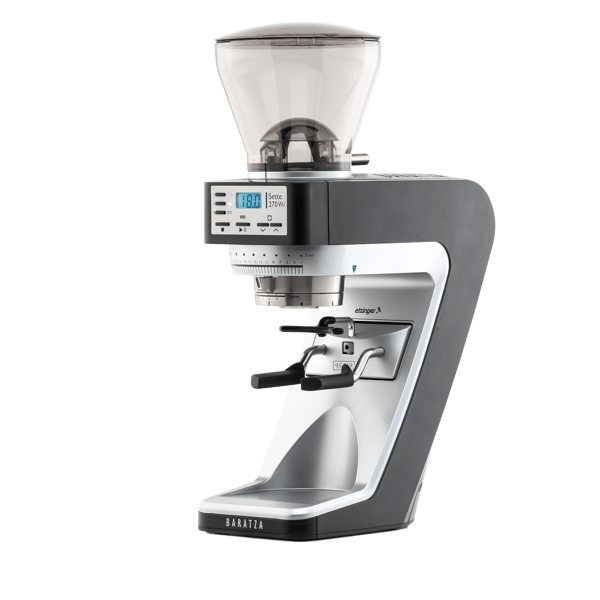
Baratza Sette 270Wi Espresso Grinder
The Sette 270Wi is the most balanced espresso grinder for serious home users who don't want to spend $700. It combines precision, consistency, and ease of use at a reasonable price. The stepless adjustment dial gives you the microadjustment needed for espresso dialing, the flat burrs produce uniform particles, and retention is minimal -- typically under 0.5 grams. The 54mm flat burrs are industrial-grade and built to last. Bluetooth connectivity with the Baratza app (newer Wi-Fi models) makes tracking shots optional but useful.
- Burr Type: Flat (54mm)
- Grind Range: Stepless (macro + micro adjustment)
- Retention: <0.5g
- Dosing: Manual portafilter, no timer
- Warranty: 1 year
- Price: ~$400
Pros
- Excellent consistency across shots -- minimal fines and boulders
- Stepless adjustment is essential for espresso dialing
- Minimal retention (under 0.5g) means predictable doses
- Durable flat burrs that hold up to daily use
- No timer needed -- weight-based dosing is more accurate anyway
Cons
- Manual portafilter dosing (no grind-on-demand like Breville)
- Hopper is single-dose only (20-25g max), which some find limiting
- Price is mid-range (not budget, not premium)
Verdict: The best all-around espresso grinder for someone building a quality home setup. If you're buying one grinder and want reliable, repeatable shots without the premium price tag, this is the one. Thousands of home baristas use this and pull consistent espresso daily.
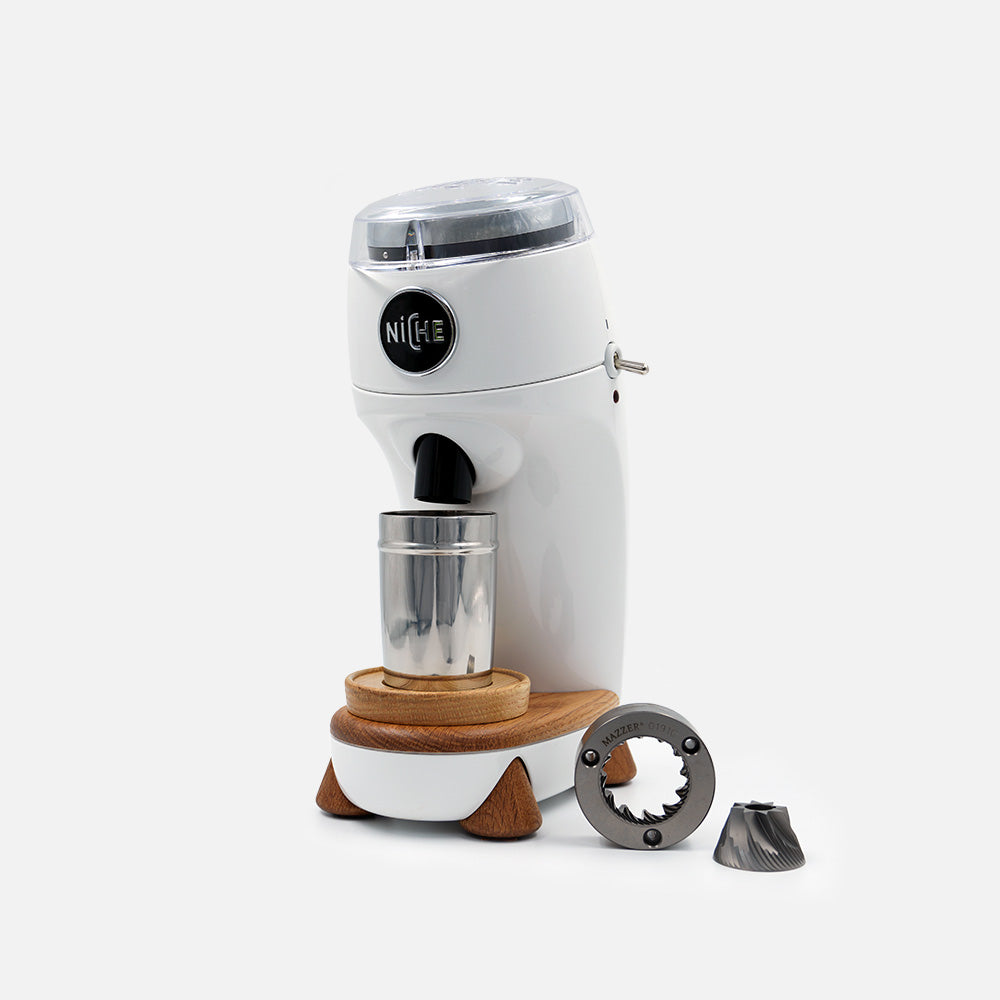
Niche Zero Burr Grinder
The Niche Zero is the premium single-dose grinder for enthusiasts. Conical burrs, stepless adjustment, near-zero retention (0.1g), and a build quality that justifies the $700 price. The design is beautiful -- German engineering, stainless steel, minimal plastic. It's built for single-dose workflows where you grind exactly what you need for one shot, eliminating grinds sitting in the hopper losing freshness. Retention below 0.1g means virtually no waste.
- Burr Type: Conical (83mm)
- Grind Range: Stepless (infinite micro-adjustment)
- Retention: <0.1g (near-zero)
- Dosing: Single-dose (weigh bean, grind, pull shot)
- Warranty: 2 years
- Price: ~$700
Pros
- Near-zero retention -- zero waste, maximum freshness
- Conical burrs produce excellent particle uniformity
- Single-dose workflow is the gold standard for espresso
- Build quality is exceptional (German engineering)
- Warranty is generous (2 years)
Cons
- Expensive ($700 is a significant investment)
- Single-dose only -- slower for making multiple drinks in sequence
- Direct sales only in many regions (limited retailer stock)
Verdict: Worth it if you value precision, build quality, and single-dose freshness. If you're pulling one or two shots a day, the Niche Zero is the best grinder money can buy. Not a beginner grinder, but an investment that lasts years.
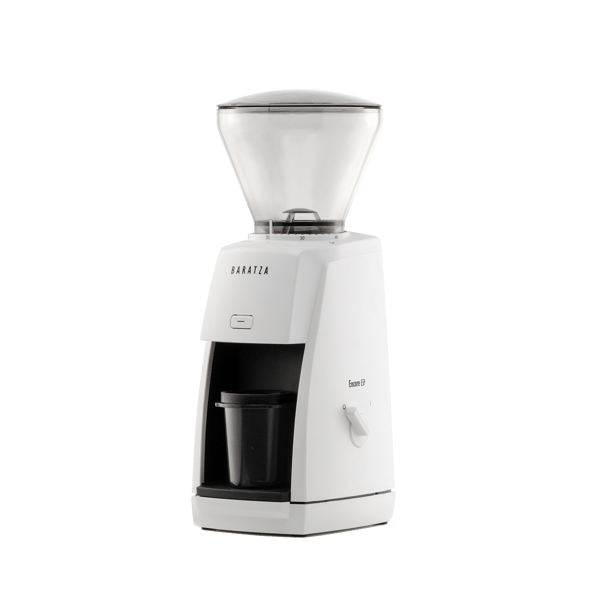
Baratza Encore ESP Conical Burr Grinder
The Encore ESP is the most affordable grinder recommendation we make. At $200, it's a massive step up from blade grinders and handles espresso reasonably well. Conical burrs, 40 stepped positions (enough for espresso if not perfect), and decent durability. It's not stepless so dialing in requires moving between stepped positions -- not ideal but workable. Retention is 2-3g which is higher than premium grinders but acceptable for someone building their first espresso setup on a budget.
- Burr Type: Conical
- Grind Range: Stepped (40 positions)
- Retention: 2-3g
- Dosing: Manual portafilter
- Warranty: 1 year
- Price: ~$200
Pros
- Most affordable option at $200
- Solid burrs for the price -- conical design is reliable
- Works for espresso with some adjustment limitations
- Parts are available and affordable if repair needed
Cons
- Stepped (not stepless) -- dialing in espresso is harder
- Higher retention (2-3g) means more waste
- Noisier than premium grinders
Verdict: Best entry point to espresso if budget is a hard constraint. You'll learn the fundamentals and can upgrade later. Don't expect the precision of a $400+ grinder, but it's a genuine improvement over blade grinders.
DF64 Gen 2 Single Dose Grinder
The DF64 Gen 2 is the grinder r/espresso recommends most frequently in the under-$400 range. 64mm flat stainless steel burrs (upgradable to SSP), true zero retention under 0.1g, stepless adjustment, and a single-dose workflow. Chinese-manufactured but built to compete with grinders twice its price. The community mod ecosystem is strong - you can swap burrs, add alignment shims, and tune it to your taste profile.
- Burr Type: Flat (64mm stainless steel)
- Grind Range: Stepless
- Retention: <0.1g (true zero retention)
- Dosing: Single-dose with bellow
- Burr Upgrade: SSP, Mazzer, and others compatible
- Price: ~$300-350
Pros
- True zero retention - no waste, no stale grounds
- Stepless adjustment for precise espresso dialing
- 64mm flat burrs upgradable to premium SSP burr sets
- Strong Reddit/Home-Barista community and mod support
- $100+ cheaper than Sette 270Wi with comparable performance
Cons
- Build quality not as refined as Baratza or Niche
- Stock burrs are good but not exceptional (most owners upgrade)
- Newer brand with less long-term reliability data
Verdict: Best bang-for-buck espresso grinder on the market. The DF64 Gen 2 punches well above its price class, especially with a burr upgrade. If you want to save $100 over the Sette and don't mind a slightly less polished build, this is the move.
How to Choose an Espresso Grinder
Burr Type: Flat vs Conical
Flat burrs have two parallel discs that cut coffee particles to a uniform size. They produce consistent, repeatable grinds essential for espresso. Most premium grinders use flat burrs.
Conical burrs are cone-shaped and produce slightly less uniform grinds but retain less coffee in the burr chamber. They're common in consumer grinders and work fine for espresso, just less precisely than flat.
Verdict for espresso: Flat burrs are better, but quality matters more than burr type. A quality conical grinder beats a cheap flat-burr grinder.
Stepless vs Stepped Adjustment
Stepless grinders let you adjust grind size in tiny increments (microns). For espresso, this matters because dialing in often requires adjustments smaller than the stepped positions available on consumer grinders.
Stepped grinders have fixed positions (like 1, 2, 3, 4, etc.). You can dial in espresso with stepped grinders, but sometimes your ideal grind falls between two positions and you're forced to compromise.
Verdict: Stepless is better for espresso. If you're on a budget, stepped still works -- you'll just spend more time dialing in.
Grind Retention
Retention is how much ground coffee stays in the burr chamber after you grind. High retention means:
- You waste grinds (old coffee stays in the burrs, new coffee blends with it)
- Unpredictable doses (you aim for 18g, but 1-2g is already in the burrs from last grind)
- Stale grinds (coffee oxidizes while sitting in the burrs)
Good retention: Under 1g. Excellent retention: Under 0.5g. Near-zero retention: Under 0.1g (single-dose grinders like Niche Zero).
If you're using a scale to dose (which you should), lower retention matters less. But it's still a quality indicator.
Price and Performance
- $200-250: Entry-level (Baratza Encore ESP, Breville Smart Grinder Pro). Stepped, decent burrs, works for espresso with limitations.
- $300-400: Enthusiast tier (Baratza Sette 270Wi, DF64 Gen 2, Eureka Mignon Specialita). Stepless or many steps, good retention, consistent grinds.
- $600+: Premium (Niche Zero, DF64 Gen 2 Max). Single-dose, exceptional build, near-zero retention, German engineering.
Don't spend more on the grinder than the machine. A $700 grinder with a $400 machine is backwards. Get a solid grinder ($300-400) and pair it with a better machine.
Single-Dose vs Hopper
Single-dose: You weigh beans, pour them into the grinder, grind exactly what you need for one shot. No hopper. This is the professional workflow and it minimizes stale grinds. But it's slower for multiple drinks.
Hopper: You fill the hopper with beans and grind as needed. Faster for multiple drinks. Some beans sit in the hopper longer, losing freshness. Most home setups use hoppers.
Recommendation: Hopper-based grinders are fine. Single-dose is premium but not necessary. Don't let this decision paralyze you.
Frequently Asked Questions
What is the best espresso grinder for beginners?
The Baratza Sette 270Wi. It's under $400, has stepless adjustment for precise dialing, minimal retention, and works reliably. Thousands of beginners use this grinder and pull good espresso daily. If budget is tight, the Baratza Encore ESP at $200 is a solid entry point.
Is it worth upgrading from a blade grinder to a burr grinder?
Absolutely yes. Blade grinders produce uneven particle sizes, which results in uneven extraction and bad espresso. A burr grinder produces uniform particles at the exact size you set. This is the single most important upgrade you can make for home espresso.
What's the difference between flat and conical burrs?
Flat burrs cut particles more uniformly and produce consistent grind sizes. Conical burrs are slightly less uniform but retain less ground coffee. For espresso, flat burrs are generally preferred because consistency matters. But a quality conical grinder beats a cheap flat-burr grinder.
How important is grind retention?
Important but not deal-breaking if you use a scale to dose. Retention is how much ground coffee stays in the burr chamber. Low retention (under 0.5g) means less waste and more predictable doses. If you're buying based on retention alone, you're missing the bigger picture -- consistency and burr quality matter more.
What is stepless adjustment and why does it matter?
Stepless grinders let you adjust grind size in tiny increments (microns). Stepped grinders have fixed positions. For espresso, stepless is better because dialing in often requires adjustments between stepped positions. But you can pull good espresso with stepped grinders if you're patient.
Should I spend $700 on a grinder if I'm new to espresso?
No. Start with a $300-400 grinder like the Sette 270Wi. You'll learn the fundamentals and discover what matters to you. Once you're pulling consistent shots and understand your preferences, upgrade if you want. The premium grinders ($700+) offer incremental improvements in precision and retention, not revolutionary changes in shot quality.
Additional Grinders Worth Considering
DF64 Gen 2 Flat Burr Grinder
Budget alternative to the Sette 270Wi. Chinese-manufactured flat burr grinder at $300. Stepless adjustment, low retention, excellent consistency for the price. Newer in the market but gaining strong community following. Fewer bells and whistles than Baratza but solid performance. Good option if you want to save $100 versus the Sette.
Eureka Mignon Specialita
Italian-made grinder at $350. Stepped adjustment (not stepless), good flat burrs, higher retention than premium grinders. Known for reliability and simplicity. Popular in Europe. Works well for espresso but dialing in is slightly harder than stepless options. If you prefer a European aesthetic and don't mind stepped adjustment, this is a worthy alternative.
Breville Smart Grinder Pro
Convenient for the budget-conscious. Sixty stepped positions (more than Encore, less than stepless). Built-in timer with dosing presets. Can be paired with Breville machines but works fine standalone. Slightly louder than premium options but reliable workhorse. Good if you want automation and preset functions.
Grinder Maintenance and Durability
How Long Do Burrs Last?
Quality flat burrs typically last 300-500+ hours of grinding. At one shot per day (one grind), that's 1-2 years of daily use. Premium burr sets last longer. Budget grinder burrs wear faster. When burrs wear, they lose sharpness and can't produce uniform particles. Worn burrs require slightly coarser grinds to compensate.
Keeping Your Grinder Clean
Espresso grinds leave oils on burrs. Over weeks, oil buildup can affect performance. Some grinders are easier to clean than others. Removing the burr chamber and wiping with a dry cloth quarterly keeps most grinders performing well. Some enthusiasts use specialized grinder cleaning tablets (like Cafiza) dissolved in water and run through the grinder.
When to Replace Burrs
If your shots suddenly taste inconsistent despite dialing in properly, burrs might be worn. Replacement burr sets are available for most grinders ($50-150). Replacing burrs gives a worn grinder new life. It's cheaper and more sustainable than buying a new grinder.
Testing Methodology
Our methodology: we cross-referenced manufacturer specs (burr size, motor power, RPM, warranty), analyzed hundreds of verified purchase reviews on Amazon and enthusiast forums including HomeBarista.com and r/espresso, and evaluated real-world user reports on grind consistency, retention, and shot repeatability. Pricing verified at time of publication.
Last updated: 2026