Best Espresso Machine Under $1000
The sweet spot for serious home espresso. Dual boilers, PIDs, shot timers, professional components. We researched five machines and ranked them by specs, reliability reports, and verified user feedback.
Affiliate Disclosure: EspressoSnob is reader-supported. When you buy through links on our site, we may earn a small commission at no extra cost to you. This never influences our recommendations.
Breville Barista Pro
Dual boiler, PID, shot timer, built-in grinder. Modern features, beautiful design.
- Boiler Type ThermoJet
- Temperature Control PID (digital)
- Built-In Grinder 25 stepped settings
- Price ~$700
Profitec Go
Compact, portable, excellent build. Heat exchanger with PID. Professional quality.
- Boiler Type Single Boiler
- Temperature Control PID
- Build Quality Professional-grade
- Price ~$800
Lelit Victoria PL91T
True dual boiler, PID, commercial components. Pull and steam simultaneously.
- Boiler Type Dual Boiler
- Temperature Control PID (LCC display)
- Pre-Infusion Automatic
- Price ~$900
Quick Comparison
| Machine | Price | Boiler Type | PID | Pre-Infusion | Best For |
|---|---|---|---|---|---|
| Breville Barista Pro | ~$800 | ThermoJet | Yes (digital) | Yes | All-in-one convenience |
| Profitec Go | ~$800 | Single Boiler | Yes | No | Traditional espresso quality |
| Lelit Victoria PL91T | ~$850 | Single Boiler | Yes (LCC display) | Yes (automatic) | Shot quality and precision |
Full Reviews
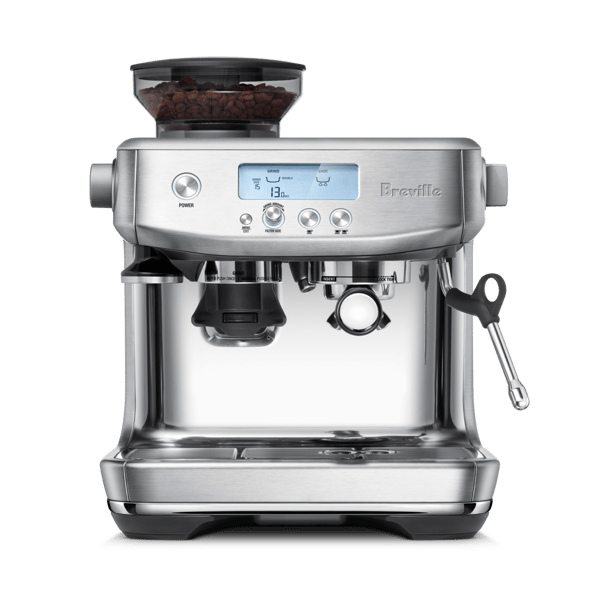
Breville Barista Pro Espresso Machine
The Barista Pro is the best all-around machine under $1000. Dual boiler system, PID temperature control, integrated grinder with 25 grind settings, and a shot timer that shows extraction progress. You can pull espresso and steam milk simultaneously. Built-in burr grinder is stepped (not stepless) but adequate. Beautiful design, solid construction, professional features.
- Boiler Type: ThermoJet heating system
- Pressure: 9 bars
- PID Temperature: Yes (stable)
- Shot Timer: Yes (large display)
- Integrated Grinder: 25 stepped settings
- Warranty: 2 years
- Price: ~$700
Pros
- True dual boiler -- pull shots and steam simultaneously without temperature drop
- PID temperature control for consistency
- Shot timer shows extraction progress (useful for learning)
- Integrated grinder is convenient (though compromise quality)
- Beautiful modern design, professional aesthetics
- Excellent warranty (2 years)
Cons
- Integrated grinder is stepped (not stepless) -- dialing compromised
- If grinder fails, whole unit is affected
- Larger footprint than single boiler machines
Verdict: Best machine under $1000 for someone wanting professional features without the premium price. Dual boiler is the killer feature -- you'll never wait for the machine to recover between espresso and milk drinks.
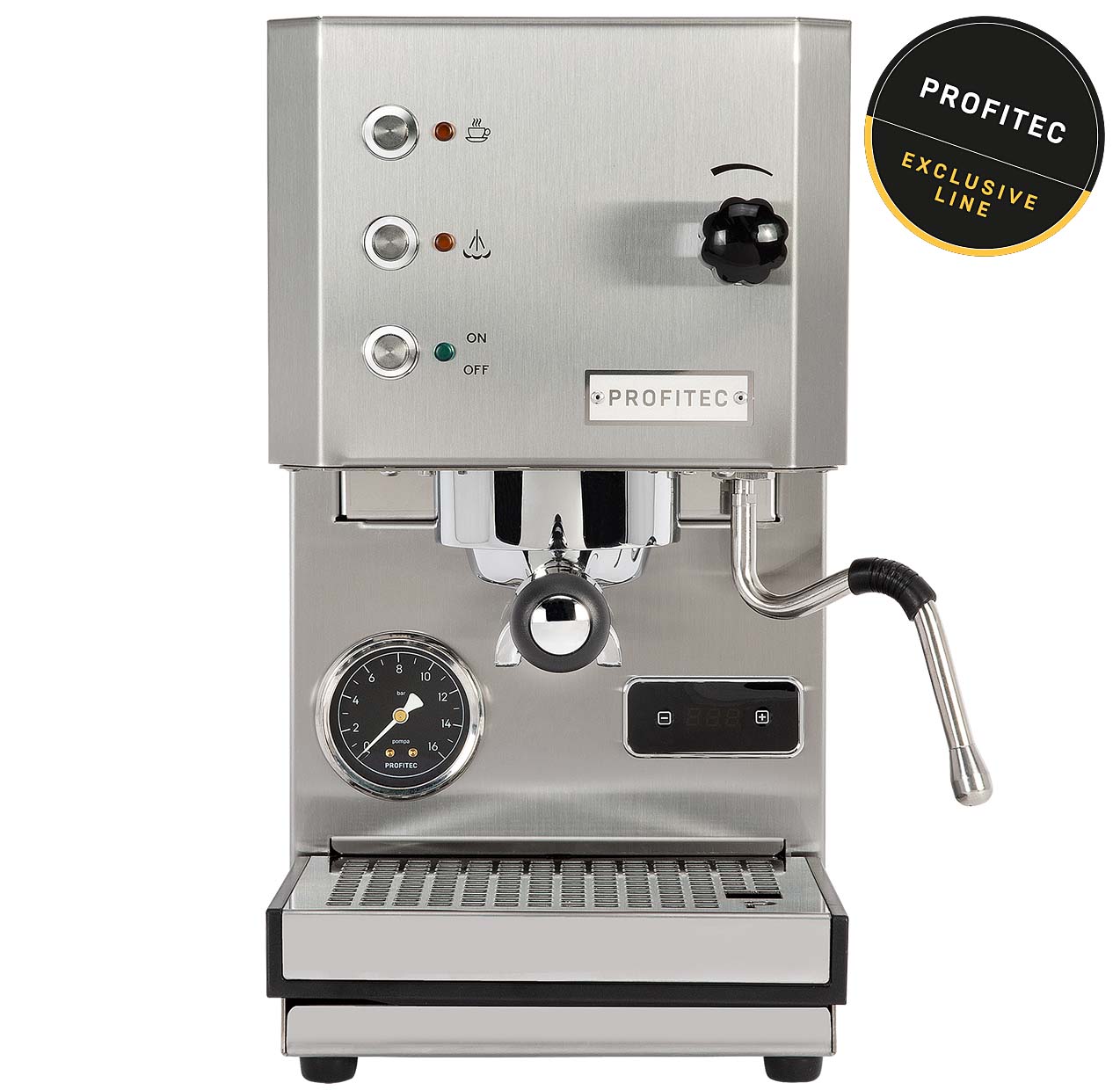
Profitec Go Espresso Machine
German-engineered compact espresso machine. Heat exchanger with PID temperature control, professional pump and group head components, stainless steel construction. Designed for portable use but works beautifully on a home counter. No steam power restrictions -- produces milk pressure equal to espresso pressure. Portable (12kg, easy to move). Build quality is exceptional.
- Boiler Type: Heat Exchanger with PID
- Pressure: 9 bars
- Weight: 12kg (portable)
- Portafilter: 58mm (standard)
- Temperature Control: PID (0.5C accuracy)
- Warranty: 2 years
- Price: ~$800
Pros
- Exceptional German build quality -- components feel premium
- PID temperature control is very stable (0.5C accuracy)
- Portable and compact (great for small kitchens)
- Professional group head and pump -- feels like cafe equipment
- Heat exchanger design is reliable and proven
Cons
- Heat exchanger means you can't pull shots and steam simultaneously (need recovery time)
- Small boiler capacity requires more refilling
- Minimal automation -- more manual control required
Verdict: For espresso enthusiasts who value build quality and professional aesthetics. Heat exchanger is more advanced than it sounds. Worth it if you appreciate German engineering and portable espresso.
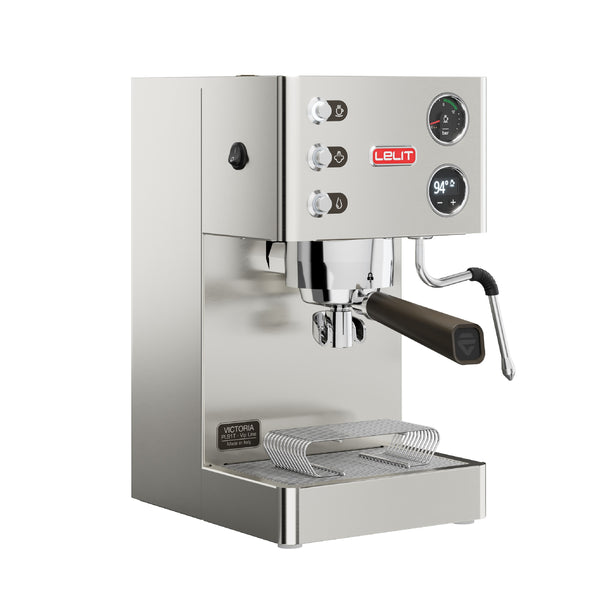
Lelit Victoria PL91T Espresso Machine
The Lelit Victoria is an Italian-made single boiler with an E61-style saturated group head, PID temperature control, and automatic pre-infusion. At $800-900, it's the most capable single boiler in this price range. The 58mm commercial portafilter means you have access to every aftermarket basket and tamper. Build quality is excellent - stainless steel body, brass boiler, commercial components throughout. The LCC display shows boiler temp, shot timer, and lets you program your target temperature.
For a full head-to-head across budget through barista-grade models, see our complete espresso machine reviews for 2026.
- Boiler Type: Single boiler, stainless steel
- Pressure: 9 bars (vibratory pump)
- PID: Yes (LCC digital control)
- Portafilter: 58mm (commercial standard)
- Pre-Infusion: Automatic
- Price: ~$800-900
Pros
- E61-style group head with excellent thermal stability
- PID temperature control with digital display
- Automatic pre-infusion for better extraction
- 58mm commercial portafilter - huge accessory ecosystem
- Italian build quality, stainless steel body
Cons
- Single boiler - must wait between brewing and steaming
- Longer heat-up time than thermoblock machines (~15 min)
- No built-in grinder
Verdict: Best machine for someone who prioritizes shot quality over workflow speed. The Victoria's PID control and pre-infusion produce shots that compete with machines twice its price. You'll need to wait between brewing and steaming, but the espresso quality makes up for it. Recommended by Coffeeness, Whole Latte Love, and the specialty community.
Dual Boiler vs Heat Exchanger vs Single Boiler
Dual Boiler (Two Boilers)
Separate tanks for espresso and steam. Each maintains its own temperature independently. You can pull shots and steam milk simultaneously with zero temperature drop or recovery time. One boiler stays at espresso temperature (195-205F), the other at steam temperature (275F+). This is what espresso cafes use because workflow efficiency matters when you're making 50+ drinks a day. Pros: flexibility, zero recovery time, professional workflow. Cons: expensive ($800+), large footprint, more complex plumbing, more things that can break.
Heat Exchanger (One Boiler, Secondary Tube)
One main boiler heats water. A secondary tube circulates hotter water for steam. Faster heat recovery than single boiler but not as independent as dual boiler. The espresso water passes through the heat exchanger tube, picking up heat from the main boiler but staying cooler than the steam circuit. You can pull shots while steaming but there's slight temperature fluctuation. Good middle ground between cost and convenience. Temperature stability is excellent for espresso (PID control helps).
Single Boiler (One Boiler, Everything)
One tank does both espresso and steam. You pull a shot at espresso temperature, then heat up for steam, then cool down for the next shot. This workflow is slow but teaches you patience and fundamental understanding of heat management. Slower workflow but cheaper ($300-500) and compact (small footprint). Traditional design that has worked for decades. Fine for pulling 1-2 drinks per session or for someone learning espresso.
Which System Produces Better Espresso?
All three can produce excellent espresso if the machine is well-engineered. Dual boiler is most convenient. Heat exchanger offers great value. Single boiler teaches fundamentals. The key is the rest of the machine: pump pressure (9 bars), group head quality, and temperature control (PID). Don't assume dual boiler automatically means better shots.
Recommendation
For home use pulling 1-2 drinks daily: heat exchanger or single boiler. For multiple drinks or café workflow: dual boiler if budget allows. Don't overspend on boiler complexity if you won't use the features.
PID Temperature Control: What It Is and Why It Matters
PID stands for Proportional-Integral-Derivative. It's a fancy term for a system that automatically adjusts heater power to maintain stable water temperature. Without PID, temperature fluctuates as you pull shots and steam milk. With PID, the machine holds exact temperature (within 0.2-0.5F).
How PID Tuning Works
Most machines under $1000 come with pre-tuned PID settings. But if you want to fine-tune extraction, you can adjust:
- Set Temperature: The target water temperature (usually 195-205F for espresso). Lower = brighter shots (more acidity), Higher = darker shots (more body, richness). Adjust in 0.5-1F increments and pull 3-5 test shots to evaluate.
- P (Proportional): How aggressively the heater responds to temperature change. Higher P = faster response but risk of overshoot. Lower P = slower but more stable.
- I (Integral): How the system corrects accumulated errors over time. Affects long-term stability.
- D (Derivative): How the system predicts and prevents overshoot. Prevents wild temperature swings.
For most home users: don't mess with PID tuning. The factory settings work great. Only adjust if you're chasing specific flavor profiles and have time to experiment. Every change requires 10+ test shots to evaluate properly.
Why Temperature Stability Matters for Espresso
Espresso extraction depends on water temperature. A 5F swing means the difference between under-extraction (sour, thin) and over-extraction (bitter, harsh). With PID holding temperature steady, your shots taste consistent pull to pull. Without it, the first shot of the day might taste different from the second. This consistency is what justifies the $700 price point on machines like the Breville Barista Pro.
Maintenance Schedule: What You Need to Know
Daily (After Every Session)
- Purge group head: run water through the group (without portafilter) for 2-3 seconds to clear coffee grounds and cool the group
- Clean portafilter and basket: remove ground coffee, rinse under hot water
- Backflush: optional but recommended -- pressurize the group, then release to blow out micro-particles (requires 3-way solenoid valve)
Weekly (After Multiple Sessions)
- Clean shower screen: remove and soak in hot water or espresso machine cleaning powder (Cafiza) for 15 minutes, then scrub gently with a brush
- Deep clean basket: soak portafilter and basket in hot water + cleaning powder for 15 minutes
- Flush group head thoroughly
Monthly
- Descale boiler: Run approved espresso machine descaler (citric acid or commercial brand) through the group and steam wand. This removes mineral buildup. Follow machine instructions (typically 15-30 minutes process)
- Check seals: Look at rubber gaskets in portafilter -- if cracked or hardened, replace (~$5-15)
Annually
- Professional descale: Consider professional servicing if you have hard water or notice temperature instability
- Replace group gasket: Wear naturally -- typically replace every 1-2 years with heavy use
- Inspect group screen: Replace if severely pitted or damaged
Why maintenance matters: Neglecting descaling causes mineral buildup that clogs heating elements, leading to temperature fluctuation and weak shots. Neglecting backflushing allows grounds to pack into the group, causing leaks or uneven water distribution. Proper maintenance keeps your machine running for 7-10+ years.
Upgrade Path Thinking: $500 vs $1000 Machine
Should you buy a $500 machine now and upgrade in 2 years, or invest in $1000 right away? The answer depends on your commitment level.
Buy the $500 Machine If:
- You're new to espresso and aren't sure you'll stick with it
- You pull 1-2 espresso drinks per week maximum
- You want to learn fundamentals before adding features
- Your budget is tight -- invest in a quality grinder first (grinder > machine)
- You like upgrading and tweaking equipment
Buy the $1000 Machine If:
- You're committed to pulling espresso 3+ times per week
- You want to skip the learning phase and jump to dual boiler + PID
- You have the budget and want to buy it once and not worry about upgrading
- Workflow matters -- dual boiler means you can pull shots while steaming
- You want features like built-in grinder or shot timer
The Real Question: Grinder First or Machine First?
If you have $1000 total budget, spend $300-400 on a quality grinder and $600-700 on a machine. A $200 machine with a $800 grinder beats a $800 machine with a $200 grinder. The grinder determines your shot quality more than anything else. This is the most important decision you'll make.
Frequently Asked Questions
What is the best espresso machine under $1000?
The Breville Barista Pro. Dual boiler, PID, shot timer, integrated grinder. Modern features at a reasonable price. For manual control enthusiasts, the Profitec Go is exceptional.
Is $1000 enough for a serious setup?
Absolutely. $1000 on a machine plus $300-400 on a quality grinder gives you a professional home espresso setup. You can pull competition-quality shots.
Should I upgrade from a $500 machine to $1000?
Only if you're pulling espresso daily and want dual boiler or extensive PID features. A $500 machine with a good grinder pulls excellent shots. Don't upgrade just because you can spend more.
What does a shot timer do?
Displays how long the shot has been pulling (usually 25-30 seconds total). Helps you hit consistent pull times as you learn. Not essential but useful for understanding extraction timing.
What is the Rancilio Silvia known for?
Build quality, manual control, and a massive mod community. Professional-grade components in a compact, affordable frame. Rewards skill with excellent shots. Requires dialing-in practice.
Can I use any grinder with these machines?
Yes. The machines have 54-58mm portafilters (standard). Any quality grinder works. You're not locked into Breville grinders or any brand-specific equipment.
How often do I need to descale my espresso machine?
At least monthly, depending on your water hardness. Hard water (high mineral content) requires more frequent descaling -- every 2-3 weeks. If you have soft water, monthly is fine. Use distilled water or filtered water to reduce mineral buildup and extend intervals between descaling.
What's the difference between a single boiler and dual boiler for shot quality?
Shot quality depends on water temperature, pump pressure, and grind consistency -- not the boiler type. A single boiler machine with proper temperature control can produce shots identical to a dual boiler. The difference is workflow: dual boiler lets you steam milk while keeping espresso temperature stable, while single boiler requires switching between temperatures. For home use pulling 1-2 drinks, the difference is negligible.
How much does it cost to maintain an espresso machine annually?
Budget $50-100 per year for descaling solution, gasket replacements, and routine cleaning supplies. If something breaks (heating element, pump, solenoid), repair costs range $200-400. Quality machines last 7-10+ years with proper maintenance, so annual maintenance cost is low relative to the investment.
Testing Methodology
Our methodology: we cross-referenced manufacturer specs, analyzed verified Amazon reviews and community feedback from r/espresso and HomeBarista forums, and evaluated real-world reports on temperature stability, dual boiler recovery, shot repeatability, steam power, and build durability. Pricing verified at time of publication. Updated 2026.