Espresso Grinder vs Regular Coffee Grinder
Why a $200 espresso grinder beats a $50 regular grinder. Particle size, consistency, extraction physics, and why espresso demands precision. Understanding this changes everything.
Affiliate Disclosure: EspressoSnob is reader-supported. When you buy through links on our site, we may earn a small commission at no extra cost to you. This never influences our recommendations.
The Short Answer
A dedicated espresso grinder is engineered for precision that regular grinders can't match. Regular grinders are designed for convenience and speed. Espresso grinders are designed for consistency.
Regular grinder: "Grind coffee to medium" (broad range, fast).
Espresso grinder: "Grind coffee to 0.2mm particle size" (precise, requires more control).
This difference becomes critical when pressurized water is forced through packed coffee.
The Physics: Why Espresso Demands Precision
Espresso Extraction Basics
Espresso forces 9 bars of pressure through 18-20 grams of tightly-packed ground coffee. The water stays in contact with the grounds for only 25-30 seconds. In that short time, water must dissolve enough solubles to produce good flavor.
If particles are inconsistent:
- Fine particles: Extract too fast (over-extract), taste bitter, muddy
- Coarse particles: Extract too slowly (under-extract), taste sour, thin
- Uneven mix: Some areas over-extract, some under-extract. Result: confused, bad-tasting shot
Pour over coffee is more forgiving. Water sits with grounds for 3-4 minutes. Uneven particle sizes matter less because extraction time is longer.
Grind Consistency as a Percentage
Particle size distribution for good espresso extraction:
- Espresso grinder result: 85% uniform, 15% fines (acceptable)
- Regular burr grinder result: 60% target size, 25% too fine, 15% too coarse (bad)
- Blade grinder result: Random particle chaos. Not suitable for espresso.
That 25% difference in particle consistency is the difference between good espresso and undrinkable espresso.
Key Differences: Espresso Grinder vs Regular Grinder
| Feature | Espresso Grinder | Regular/Filter Grinder |
|---|---|---|
| Burr Precision | Aligned to microns (0.1mm tolerance) | Aligned to tenths of mm (0.5-1mm tolerance) |
| Adjustment Range | Stepless or many steps (20-40+ positions) -- fine control | Fewer positions (8-15 steps) -- coarser control |
| Grind Consistency | 80-90% uniform particle size | 60-70% uniform particle size |
| Retention | Low (0.5-2g) -- less waste, consistent doses | High (3-5g) -- more waste, harder to dose |
| Burr Type | Usually flat burrs (more uniform) or quality conical | Any burr type, often lower quality |
| Typical Price | $200-700+ (precision costs money) | $50-150 (convenience price point) |
The Retention Problem
Retention is how much ground coffee stays in the grinder after you empty the portafilter. A regular $50 grinder might retain 3-5 grams. An espresso grinder might retain 0.5-1 gram.
Why this matters:
- You want to dose 18g for your shot
- 3g from last grind is still in burrs (you don't know it's there)
- So you actually have 18g fresh + 3g stale mixed together
- That 3g stale coffee ruins consistency
Low retention (under 1g) lets you dial in predictably because what you see is what you get.
Why You Can't Use a Regular Grinder for Espresso
Lack of Fine Adjustment
A regular coffee grinder might have 10-12 coarse positions. From position 5 to position 6, the particle size might jump by 0.5mm. For espresso, you need control within 0.1mm. Regular grinders physically can't dial in that precisely.
Result: Your espresso is either too fine (bitter) or too coarse (sour), with no middle ground.
Particle Size Inconsistency
Regular grinders produce a wider range of particle sizes. This means some water flows through fine particles (over-extracting) while bypassing coarse particles (under-extracting). The shot tastes confused and bad.
High Retention and Oxidation
Stale grinds sitting in burrs oxidize. Your shot becomes a mix of fresh and stale coffee, which tastes inconsistent and off.
Espresso Grinder vs Blade Grinder (Don't Use Blade)
This deserves its own section because blade grinders are sometimes recommended for budget-conscious people.
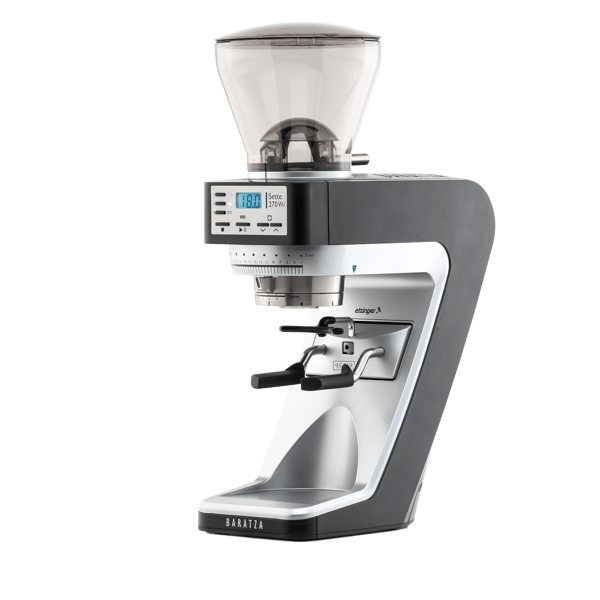
Burr grinder: precise, consistent particles
Why Blade Grinders Don't Work for Espresso
Blade grinders use a spinning blade to chop coffee (like a blender). You can't control particle size -- you just hold the button and hope. Result:
- Inconsistent particle sizes (dust to chunks)
- Heat generated during grinding (damages flavor)
- No way to dial in for espresso
Don't use a blade grinder for espresso. Save up for a burr grinder instead. A $150 burr grinder produces dramatically better espresso than any blade grinder.
Burr grinders deliver consistency. Blade grinders cannot.
Can One Grinder Do Both Espresso and Filter Coffee?
Yes. Many grinders (Baratza Sette 270Wi, DF64, Eureka Mignon) work well for both espresso and filter coffee. The key is having precision and consistency.
Example: The Baratza Sette 270Wi
- For espresso: Set to fine position (1-10 range) -- produces 0.3-0.5mm particles
- For pour-over: Set to medium position (15-20 range) -- produces 0.8-1.2mm particles
- Same grinder, different positions, both produce good coffee
Don't buy separate grinders. Buy one quality espresso grinder and use it for both. The precision that serves espresso also serves filter coffee well.
Price Breakdown: What You're Actually Paying For
$50 Regular Grinder
- Loose burr alignment (easier to manufacture, cheaper)
- 10-12 stepped positions (simple, less engineering)
- High retention (smaller burr chamber, cost-cutting)
- Lower-grade burrs (softer metal, shorter lifespan)
- Plastic housing (weight-saving, not durability)
$300-400 Espresso Grinder (Baratza Sette, DF64)
- Precision-aligned burrs (micron tolerance, expensive)
- Stepless or 20+ stepped positions (fine control requires engineering)
- Low retention design (requires larger, well-designed burr chamber)
- Industrial-grade burrs (harder metal, longer life)
- Metal housing (durability, weight, cost)
- Better motors that don't generate excess heat
You're not paying $300 for looks. You're paying for precision, consistency, and durability that enables good espresso.
The Real Question: Is Espresso Worth the Grinder Cost?
If you're serious about espresso at home: Yes. A $300-400 grinder with a $400-500 machine lets you pull cafe-quality shots daily.
If you want excellent coffee on a budget: No. Spend $150 on a decent filter grinder and $30 on a pour-over dripper. You'll get better coffee faster and cheaper than struggling with espresso on a budget.
Espresso is worth it if you love the ritual, want to learn the technical side, and can justify the investment. It's not the only way to make excellent coffee.
Particle Distribution Science: Why Bimodal Distribution Matters
Coffee particles aren't uniform. Every grinder produces a bell curve of particle sizes. The closer the curve is centered (tight bell), the better. The flatter and wider the curve (bimodal distribution), the worse.
Uniform Distribution (Good)
A quality espresso grinder produces particles clustered around the target size. Example: 80% of particles between 0.4-0.7mm, few fines (dust), few chunks. Water flows through evenly, extraction is consistent.
Bimodal Distribution (Bad)
A cheap grinder produces particles spread across a wide range. Example: 30% fines (under 0.2mm), 40% medium (0.4-0.7mm), 30% chunks (over 1mm). The fines clog, chunks leave gaps. Water bypasses chunks (under-extraction) and gets trapped in fines (over-extraction) simultaneously. You get both sour AND bitter in one shot.
Why Espresso Grinders Are Better
Espresso grinders use flat burrs that cut particles to the same size. Precision is measured in microns (thousandths of a millimeter). A $300 espresso grinder focuses the bell curve tightly. A $50 regular grinder spreads it wide.
For filter coffee, this matters less. A wide distribution still works if extraction time is long. For espresso, tight distribution is non-negotiable -- pressure amplifies inconsistency.
Grind Retention and Single Dosing: The Cost of Inconsistency
Grind retention is how much coffee stays inside the burrs after you grind. This matters for consistency and cost of ownership.
High Retention Problem (Regular Grinders: 3-5g)
You want to dose 18g of fresh coffee for a shot. 3g from the previous grind is still in the burrs (you can't see it). So you have 18g fresh + 3g stale mixed. That stale coffee is oxidized and tastes flat. Your shots vary depending on how long the retained coffee sat there.
Example: Grind on Monday morning, then grind again Tuesday morning. Some retained Monday coffee is now 24 hours old. Tastes worse than fresh.
Low Retention Solution (Espresso Grinders: 0.5-1g)
Low retention grinders let virtually all ground coffee fall through. What you see is what you get. Dose 18g, get 18g fresh every time. No surprises, no stale coffee hidden in burrs.
Cost Over 5 Years
- Regular Grinder (3-5g retention): 4g wasted per shot x 2 shots/day x 365 days/year x 5 years = 14.6 kg wasted = ~$290 in lost coffee quality and waste
- Espresso Grinder (0.5-1g retention): 0.75g wasted per shot x 2 shots/day x 365 days/year x 5 years = 0.55 kg wasted = ~$11 in loss
Over 5 years, low retention saves $280 in wasted coffee alone. This partially offsets the grinder cost difference.
Maintenance Comparison: Long-Term Cost of Ownership
Regular Grinder Maintenance
- Burr replacement: Burrs dull every 1-2 years (cheaper materials). Replacement cost: $30-60. Downtime while waiting for replacements.
- Cleaning: Burrs build up residue. Compressed air or disassembly needed monthly.
- Durability: Motors wear out. Typical lifespan: 3-5 years with daily use. Then you buy another one.
- Temperature: No heat management. Grinder heats up, affecting flavor in summer.
Espresso Grinder Maintenance
- Burr replacement: Burrs stay sharp 3-5 years minimum (premium materials). Replacement: $60-120 when needed. Lifespan nearly 2x longer.
- Cleaning: Still needs regular cleaning but better design means less buildup.
- Durability: Professional motors, better engineering. Typical lifespan: 7-10+ years with daily use.
- Temperature: Better heat dissipation. Stays consistent even in summer or during rapid grinding.
5-Year Cost Comparison
- Regular Grinder ($50): Buy twice ($100), replace burrs once ($45), cleaning supplies ($15) = $160 total
- Espresso Grinder ($300): Buy once, replace burrs maybe ($80), cleaning supplies ($15) = $395 total
Espresso grinder costs $235 more over 5 years, but produces better shots, wastes less coffee ($280 savings), and likely still works after 5 years (regular grinder probably won't). The true cost is lower than it appears.
Recommended Espresso Grinders
If this guide convinced you that a dedicated espresso grinder is worth the investment, here are three solid options at different price points:
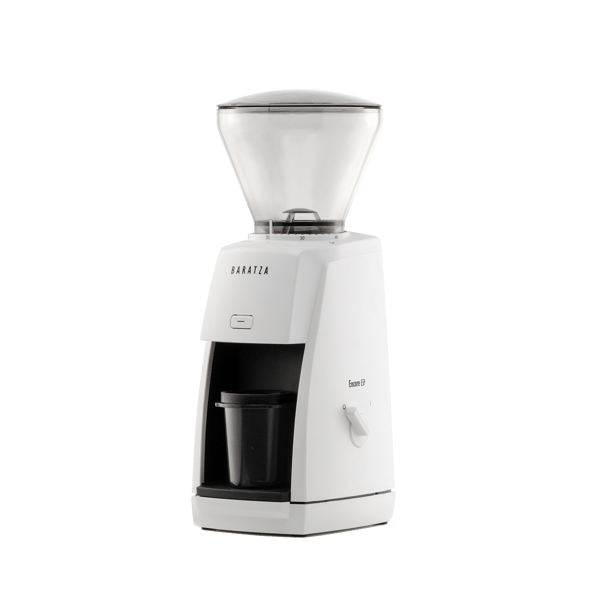
Baratza Encore ESP
Entry-level espresso grinder with conical burrs. 40 grind settings give enough range for espresso without overwhelming beginners.
- Burr Type Conical
- Grind Settings 40 stepped
- Best For Beginners
- Price Under $200
Baratza Sette 270Wi
Built-in scale, stepless adjustment, sub-0.5g retention. The grinder most home baristas land on when they get serious.
- Burr Type Flat, 54mm
- Adjustment Stepless
- Retention Sub-0.5g
- Price ~$400
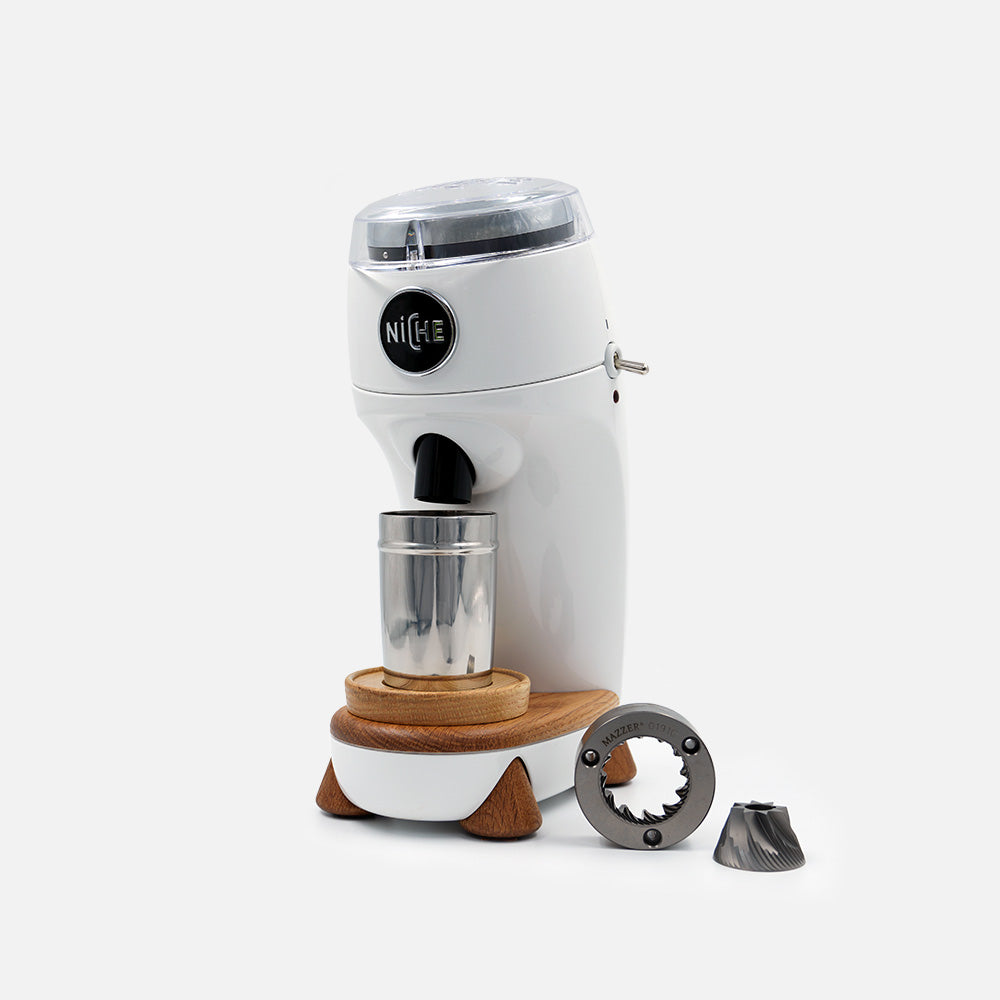
Niche Zero
Near-zero retention, 63mm conical burrs, dead simple workflow. Single-dose design means zero waste.
- Burr Type Conical, 63mm
- Retention Near-zero (~0.2g)
- Workflow Single-dose
- Price ~$700
All three are reviewed in depth in our Best Espresso Grinder 2026 guide.
Frequently Asked Questions
Can I use a regular coffee grinder for espresso?
Technically yes, but results will be poor. Lack of precision, inconsistent grinds, and high retention mean uneven extraction and bad-tasting espresso. Not recommended.
What makes an espresso grinder different?
Precision burr alignment (micron-level), stepless or many-stepped adjustment for fine control, low retention, and durable burrs. Espresso grinders are engineered for consistency, not convenience.
Why does grind consistency matter for espresso?
Espresso forces pressurized water through tightly-packed coffee in 25-30 seconds. Uneven particle sizes cause channeling (water bypassing areas), leading to sour or bitter shots. Consistency is critical for even extraction.
Can I use a blade grinder for espresso?
Absolutely not. Blade grinders produce inconsistent particle sizes, generate heat that damages flavor, and have no way to dial in for espresso. Save up for a burr grinder instead.
How much do I need to spend on an espresso grinder?
Minimum $150-200 for a usable espresso grinder. Recommended $300-400 for consistency and durability. You can spend more but you don't need to for home use.
Can one grinder do both espresso and filter coffee?
Yes. Many grinders (Baratza Sette, DF64, Eureka Mignon) work well for both. The precision that serves espresso also serves filter coffee. Buy one quality espresso grinder.
How long do espresso grinder burrs last?
With daily use, 3-5 years is typical. Professional-grade burrs can last 5-10 years. A $60-120 burr replacement is cheaper than buying a new grinder. Regular grinder burrs last 1-2 years because the material is softer.
Why is grind retention important?
Coffee left in the grinder oxidizes (tastes stale). High retention (3-5g) means stale coffee mixed with fresh shots. Low retention (under 1g) means nearly all grinds fall through. This affects consistency and flavor shot to shot.
Is a $300 grinder worth it over a $50 grinder?
Yes. Over 5 years: the $300 grinder wastes less coffee ($280 savings), lasts longer (7-10 years vs 3-5), produces better shots every time, and has burrs that stay sharp longer. The real cost difference shrinks considerably.
Real-World Example: What Goes Wrong Without an Espresso Grinder
You buy a $50 "espresso grinder" (really just a regular burr grinder) and a $400 Gaggia Classic machine. You're excited. You grind some coffee at the finest setting and pull your first shot.
What happens:
- Shot pulls in 8 seconds (way too fast) -- water channeled through the grounds without proper contact
- Tastes sour and thin -- under-extracted
- You adjust the grinder to a finer setting
- Next shot pulls in 5 seconds (still too fast) -- the adjustment between stepped positions was too coarse
- You keep adjusting but the grinder only has 10 positions and none of them dial in your machine
- You give up and assume espresso is impossible or your machine is broken
You were close -- you just needed stepless adjustment between position 6 and 7, but the grinder doesn't have that.
Now buy a $300 Baratza Sette 270Wi:
- Stepless adjustment lets you fine-tune between any settings
- First shot pulls in 26 seconds -- almost there
- Adjust slightly finer by 0.5mm
- Next shot pulls in 28 seconds with good flow
- Tastes balanced and clean
- You're officially pulling drinkable espresso
Same machine, different grinder, completely different experience. The grinder is where precision lives.
The Bottom Line
An espresso grinder is not a luxury. It's the foundation of good home espresso. You can't dial in great shots with a regular grinder -- the precision just isn't there.
The $300-400 investment in a quality espresso grinder isn't wasted. You'll use it daily for years. Compare that to a $50 grinder that frustrates you within weeks.
Invest in the grinder first. The machine matters less. A $400 machine with a $300 grinder beats a $700 machine with a $50 grinder every time.
Save up for a good grinder. Your future espresso shots will thank you.
Updated 2026