Best Espresso Machine Under $500
Pull cafe-quality espresso at home without spending $1000. We researched five machines under $500 and ranked them by specs, reliability reports, and real user feedback.
Affiliate Disclosure: EspressoSnob is reader-supported. When you buy through links on our site, we may earn a small commission at no extra cost to you. This never influences our recommendations.
Breville Bambino Plus
3-second heat-up, PID control, dual-boiler capability. Fastest machine in this price range.
- Boiler Type Dual Thermoblock
- Heat-Up Time 3 seconds
- Temperature Control PID
- Price ~$400
Gaggia Classic Evo Pro
Manual control, modifiable design, massive community. Budget-friendly workhorse.
- Boiler Type Single Boiler
- Heat-Up Time 5 minutes
- Portafilter 58mm
- Price ~$450
Breville Barista Express
Integrated grinder, 25+ grind settings. All-in-one but compromise on both.
- Boiler Type Thermoblock
- Built-In Grinder 25 stepped settings
- Heat-Up Time 30 seconds
- Price ~$500
Quick Comparison
| Machine | Price | Boiler Type | Heat-Up | PID | Steam |
|---|---|---|---|---|---|
| Breville Bambino Plus | ~$400 | Dual Boiler | 3 sec | Yes | Excellent |
| Gaggia Classic Evo Pro | ~$450 | Single Boiler | 5 min | No | Manual |
| Breville Barista Express | ~$500 | Thermoblock | 30 sec | No | Good |
| Rancilio Silvia | ~$450 | Single Boiler | 8 min | No | Manual |
| Breville Infuser | ~$400 | Thermoblock | 30 sec | No | Good |
Full Reviews
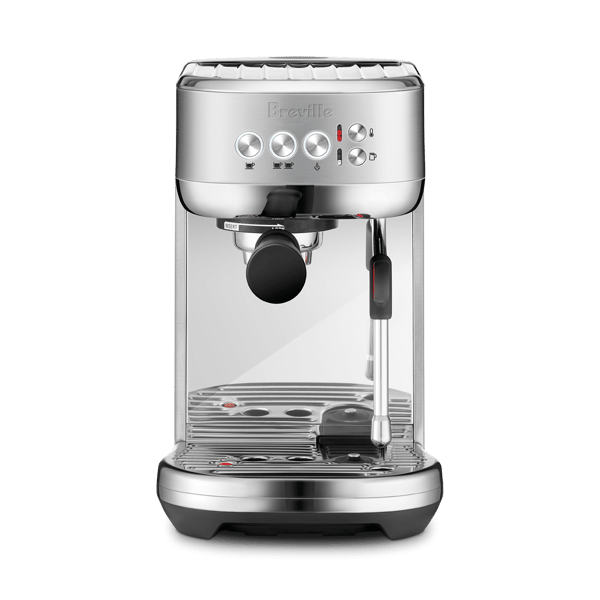
Breville Bambino Plus Espresso Machine
The Bambino Plus is the fastest espresso machine you can buy under $500. Heats to extraction temperature in 3 seconds thanks to its dual thermoblock system. This speed matters -- you can pull shots without long waits, which means more practice and better shots. 54mm portafilter (standard size), 9-bar pump pressure, and PID temperature control keep shots consistent. Automatic or manual modes let you dial in your workflow. Compact design fits small kitchens.
- Boiler Type: Dual Thermoblock
- Pressure: 9 bars (excellent)
- Heat-Up: 3 seconds
- Portafilter: 54mm (standard)
- Temperature Control: PID (stable)
- Warranty: 2 years
- Price: ~$400
Pros
- 3-second heat-up means instant readiness -- pull more shots, practice faster
- PID temperature control keeps shots reproducible
- Dual thermoblock lets you pull shots and steam milk simultaneously
- Compact footprint (small kitchen friendly)
- Auto or manual modes for different workflows
Cons
- Thermoblock can be less stable than larger boiler systems
- Water capacity is small (requires refilling frequently)
- Steam power is decent but not exceptional
Verdict: Best machine under $500. If you want to pull shots immediately after waking up, this is the one. Pair with a quality $300-400 grinder and you have a solid home espresso setup.
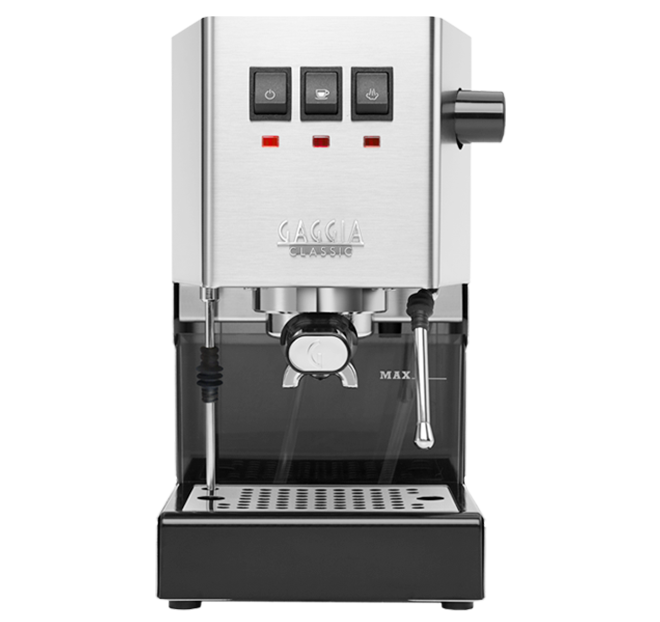
Gaggia Classic Evo Pro Espresso Machine
The Gaggia Classic is a manual machine at budget price. No PID, no automation -- just you, a lever, pressure gauge, and pump. This hands-on control appeals to espresso enthusiasts and offers more learning than automated machines. The design is modifiable (huge community support with upgrades and mods). 9-bar pump, 58mm portafilter (standard), heat-up time 5 minutes. Manual steam wand requires practice but teaches proper technique.
- Boiler Type: Single Boiler
- Pressure: 9 bars
- Heat-Up: 5 minutes
- Portafilter: 58mm (standard)
- Temperature Control: Thermostat (manual)
- Warranty: 1 year
- Price: ~$450
Pros
- Affordable price for quality espresso
- Manual operation teaches you how espresso actually works
- Huge mod community with affordable upgrades (OPV valve, shower screen, etc.)
- 58mm portafilter (standard size, lots of basket options)
- Durable, simple design -- fewer things to break
Cons
- Manual (no auto mode) -- requires technique to dial in
- Single boiler (can't pull and steam simultaneously)
- 5-minute heat-up is slow compared to modern machines
- Manual steam wand has learning curve
Verdict: Best value and best learning machine. If you want to understand espresso fundamentally, this is the path. Less convenient than automated machines but more rewarding once you dial it in.
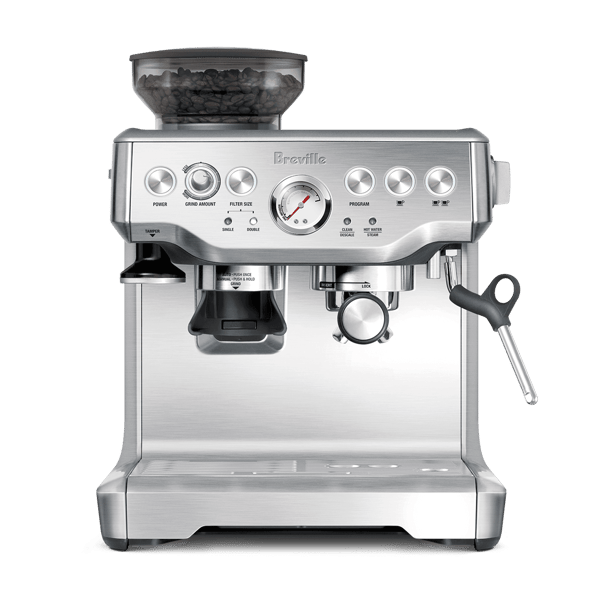
Breville Barista Express Espresso Machine
The Barista Express combines grinder and machine in one unit. Saves counter space, reduces setup time. Built-in grinder has 25 settings (stepped, not stepless). Thermoblock heating, 9-bar pump, 54mm portafilter. Designed for convenience -- grind to cup in one device. Good entry point if you want everything handled.
- Boiler Type: Thermoblock
- Pressure: 9 bars
- Heat-Up: 30 seconds
- Built-In Grinder: 25 stepped settings
- Portafilter: 54mm
- Warranty: 1 year
- Price: ~$500
Pros
- All-in-one reduces clutter and setup time
- Good for beginners -- everything in one learning curve
- Built-in grinder is decent (not premium, but functional)
- Quick heat-up (30 seconds)
Cons
- Built-in grinder is stepped, not stepless (dialing in is harder)
- Can't upgrade grinder separately -- locked into Breville quality
- Thermoblock less stable than PID machines
- If grinder breaks, whole unit is compromised
Verdict: Convenient but compromises. Better to buy machine and grinder separately so you can upgrade each independently. This machine works, but the all-in-one approach limits future flexibility.
How to Choose an Espresso Machine Under $500
Single Boiler vs Thermoblock
Single boiler: One heated tank that does espresso and steam. Slower heat-up, can't do both simultaneously, but more heat stability. Traditional espresso machines work this way. Single boiler machines heat water to one temperature, then you manually switch between espresso mode and steam mode. This means pulling a shot, waiting for the temperature to rise, steaming milk, then waiting for it to drop back down for the next shot. Time-consuming but teaches you how machines actually work.
Thermoblock: Rapid heating element that warms water on-demand. Faster heat-up (30 seconds vs 5+ minutes), can pull espresso and steam simultaneously. Less stable temperature but fast recovery. Thermoblock uses a flow-through heating system where water is heated only when it passes through the element. This is faster but less stable than a traditional boiler that maintains constant heat.
Verdict: Thermoblock is faster and more convenient for home use. Single boiler teaches you fundamentals and is more reliable long-term. Pick based on your workflow preference and patience for heat-up times.
Understanding 9-Bar Pressure
All the machines we recommend have 9 bars of pump pressure. This is the standard for espresso extraction. Nine bars is enough to push water through the coffee bed at the right speed for proper extraction (25-30 seconds). Machines with less than 9 bars can't pull true espresso. Machines with more than 9 bars don't deliver better results -- the coffee bed will only accept so much pressure before resistance reaches equilibrium.
When you see "9-bar" on specs, you're seeing a commitment to actual espresso, not a marketing gimmick.
PID Temperature Control
PID maintains water temperature within 0.5 degrees Celsius. This means consistent extraction shot-to-shot. Cheaper machines use thermostats (on/off switches) that allow larger temperature swings (2-3 degrees). The difference matters more as you get better at espresso.
Budget constraint? A good grinder matters more than PID. You can pull excellent espresso without PID if your grinder is dialed in.
What You Actually Need
- 9-bar pump pressure (essential): Non-negotiable for extraction
- 54-58mm portafilter (standard): Lets you use any basket/tamper
- Reasonable heat-up: Under 5 minutes is good. 30 seconds is luxury
- Steam wand: Manual wands are fine; auto-steam is convenience
- Build quality: All-metal internals, not plastic boilers
Machine + Grinder Budget
If you have $500 total, don't spend all of it on the machine. Split it: $300-400 on a quality grinder (non-negotiable), $300-400 on a decent machine. This balance lets you pull great shots.
If you only have $500 for machine, get a $200 machine + spend the rest on a grinder.
What to Avoid Under $500
Avoid Machine-Grinder Bundles
Tempting because they're convenient, but built-in grinders are always compromised. You're paying for two pieces of equipment that are both mediocre instead of one piece that's excellent. Better to buy machine and grinder separately.
Avoid Sub-$300 Machines
Below $300, machines cut too many corners. Cheap pumps, flimsy group heads, plastic components. You'll spend the money and get frustrated quickly. Save another $100-150 for a machine that actually delivers.
Avoid Claims of "Cafe-Quality" Without 9 Bars
Some cheap machines claim café quality but only have 3-5 bars of pressure. That's false. 9 bars is non-negotiable. If the specs don't list 9-bar pump pressure, keep shopping.
Avoid Machines Without Temperature Control
Even a basic thermostat is better than nothing. Machines with zero temperature control are unusable for espresso. Look for at least a thermostat, better yet PID.
Portafilter Size Matters: 54mm vs 58mm
Portafilter size determines coffee basket capacity and water distribution. Most machines under $500 use 54mm portafilters. Some use 58mm (commercial standard).
54mm Portafilter (Most Common Under $500)
Fits 15-20g of coffee (single or double dose). Easier to find baskets and accessories. Smaller size means less water volume, which can lead to uneven extraction if water isn't distributed evenly. Many lower-cost machines use 54mm because it's cheaper to manufacture. Examples: Gaggia Classic Evo Pro, Breville Infuser. Perfectly fine for home use -- the difference in shot quality is negligible with proper technique.
58mm Portafilter (Commercial Standard)
Fits 18-20g of coffee comfortably. Larger surface area means more even water distribution across the puck. More stable extraction, easier to dial in. Standard on espresso machines over $600. Accessories and baskets are more expensive and harder to find. Better long-term if you want to upgrade later.
The Real Question
Under $500, don't worry too much about this. Both 54mm and 58mm work fine if the rest of the machine is solid. What matters more is having a quality grinder and understanding channeling and tamping technique. A 54mm machine with a good grinder beats a 58mm machine with a cheap grinder.
Pressurized vs Non-Pressurized Baskets
Some espresso machines come with pressurized baskets (also called pressurized portafilters). This is a critical distinction that affects learning and shot quality.
Pressurized Baskets (Built-in Pressure)
These baskets have a small hole on the bottom that restricts water flow. This creates resistance that helps compensate for inconsistent grinds. If your grind is too coarse, a pressurized basket still builds pressure and pulls a shot. Sounds good, but it's a crutch. You never learn proper dialing because the machine hides your mistakes. Shot quality is limited because the basket adds artificial pressure that doesn't extract as cleanly as a proper pump. Beginners often use these without realizing they're preventing skill development.
Non-Pressurized Baskets (True Espresso)
These baskets have multiple holes, no pressure restriction. Your pump pressure (9 bars) is the only resistance. This means you must dial in your grinder correctly -- if it's too coarse, the water runs through without building pressure and you get weak shots. If it's too fine, you get slow flow and over-extraction. This forces you to learn. But once you dial in properly, the shots are excellent and you truly understand extraction. Most quality machines use non-pressurized baskets.
Upgrade Path Note
If you buy a machine with a pressurized basket, you can usually purchase separate non-pressurized baskets for $10-15. Start with pressurized to learn without frustration, then upgrade to non-pressurized once you understand the fundamentals. The Gaggia Classic Evo Pro and Rancilio Silvia both ship with pressurized baskets but allow easy upgrades.
Steam Wand Comparison: Which Machines Steam Best?
If you drink lattes or cappuccinos, steam quality matters. A good steam wand froths milk quickly and creates velvety microfoam.
Single Hole Steam Wand
Basic design -- one opening, water jet comes straight out. Requires skill to angle properly. Creates bubbles rather than smooth microfoam. Common on budget machines (Gaggia, older Brevilles). Works but requires practice. Produces adequate foam for beginners.
Multi-Hole Steam Wand
Multiple holes distribute steam pressure. Froths milk more evenly and smoothly. Creates better microfoam with less practice. More forgiving if your technique isn't perfect. Found on mid-range machines (Breville Bambino Plus, Breville Barista Express). Noticeably better than single-hole.
Panarello Wand (Steam Tip)
Has a milk intake tube that's supposed to simplify steaming. Most baristas hate these -- they create large bubbles instead of microfoam and are hard to clean. Avoid if possible. If your machine has one, remove it and use the raw steam wand underneath.
Which Under-$500 Machines Steam Best?
- Breville Bambino Plus: Multi-hole wand, froths beautifully
- Breville Barista Express: Multi-hole wand, very good
- Gaggia Classic Evo Pro: Single-hole wand, adequate but requires technique
If latte quality matters to you, lean toward Breville machines in this price range. The steam wand difference is noticeable and worth it.
Frequently Asked Questions
What is the best espresso machine under $500?
The Breville Bambino Plus. It heats in 3 seconds, has PID temperature control, and produces cafe-quality espresso. It's the fastest and most convenient machine in this price range.
Does a $400 machine pull good espresso?
Yes, absolutely. With a quality grinder. The machine matters less than the grinder for shot quality. Spend more on the grinder and less on the machine if budget is tight.
Is a built-in grinder better than a separate grinder?
No. Separate is better. You can upgrade each independently. Built-in grinders are usually compromised -- you get a mediocre machine-grinder combo instead of two quality standalone tools.
What is single boiler vs thermoblock?
Single boiler has one tank (slower heat-up, more heat stability). Thermoblock heats on-demand (faster, less stable). Thermoblock is more convenient; single boiler is more traditional.
Do I need PID temperature control?
It helps but isn't mandatory. PID maintains temp within 0.5C for consistent extraction. Budget machines use thermostats (less precise). Focus on grinder quality first.
What's the learning curve for a manual machine?
Moderate. Manual machines (like Gaggia Classic) require you to dial in pressure and timing. Takes practice but teaches real espresso fundamentals. Automated machines are easier but teach less.
Which machine steams milk best under $500?
The Breville Bambino Plus and Breville Barista Express both have excellent multi-hole steam wands that create velvety microfoam. The Gaggia Classic Evo Pro works but has a single-hole wand that requires more skill. If lattes matter, choose Breville.
What's the difference between 54mm and 58mm portafilters?
54mm is common on budget machines, 58mm is commercial standard. 58mm distributes water more evenly and offers better long-term upgradeability. But for home use, both work fine with proper technique. The grinder matters more than portafilter size.
Testing Methodology
Our methodology: we cross-referenced manufacturer specs, analyzed verified Amazon reviews and community feedback from r/espresso and HomeBarista forums, and evaluated real-world reports on heat-up time, shot repeatability, temperature stability, steam power, and build durability. Pricing verified at time of publication. Updated 2026.